


Industry News
7 Steps to Clean and Care for Cotton Buffing Wheels
A glazed cotton buffing wheel turns a soft finishing tool into a rigid disc that scratches fine metal instead of polishing it. Regular cleaning and proper fiber care prevent compound buildup, double wheel lifespan, and guarantee a flawless mirror shine on every pass.

Before touching any conditioning tool to a spinning arbor, set up your workstation to control flying fibers and microscopic debris.
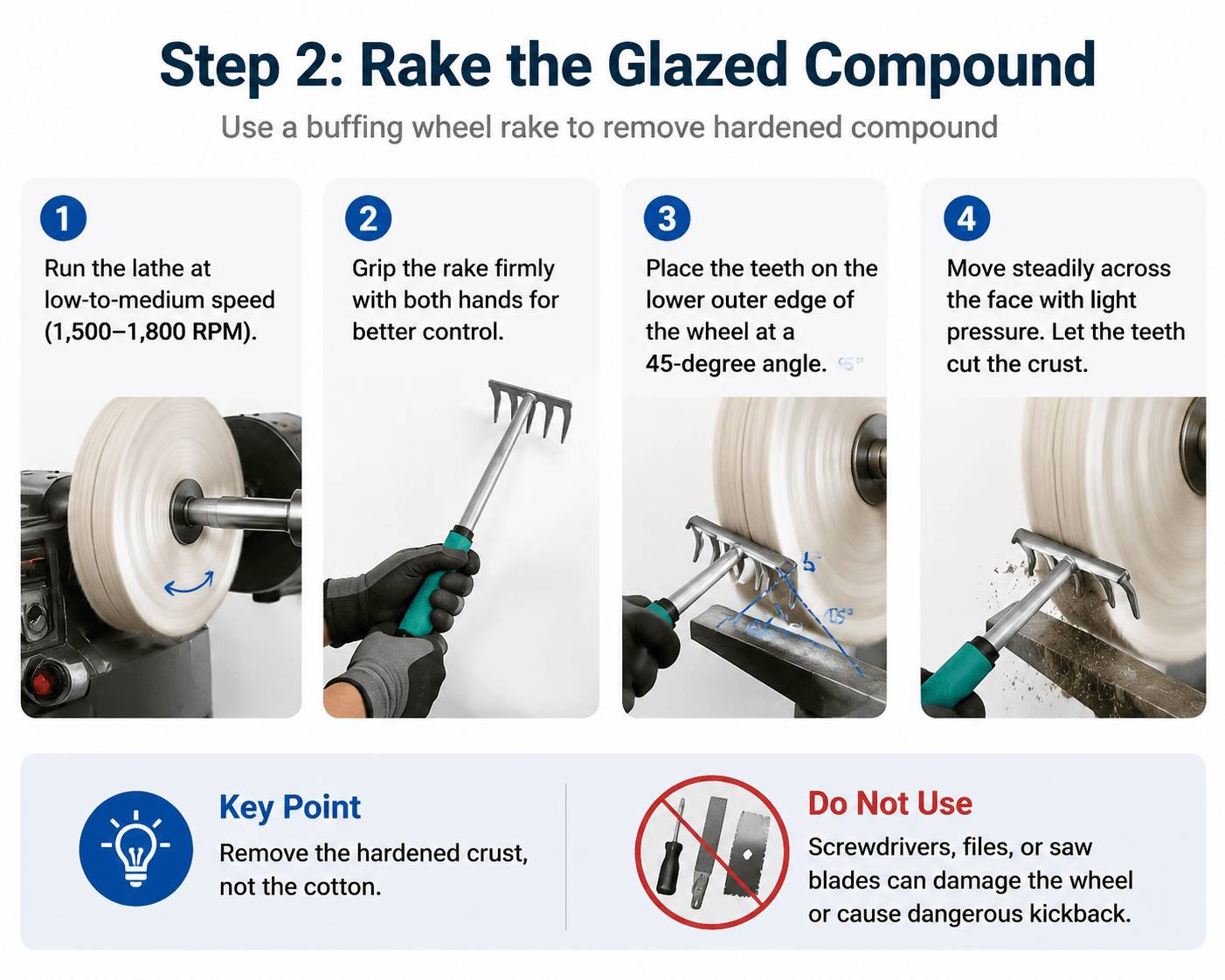
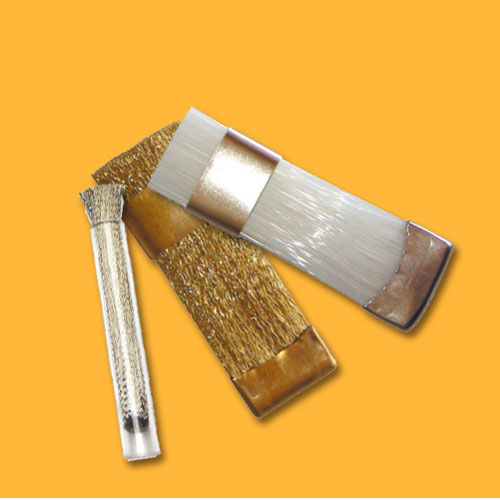
A glazed buffing wheel cannot accept fresh compound. You must physically strip away the packed crust using a dedicated buffing wheel rake. Never substitute a rake with screwdrivers, files, or saw blades, as non-dedicated tools can snag in the plies, kick back violently, or shatter under rotational torque.
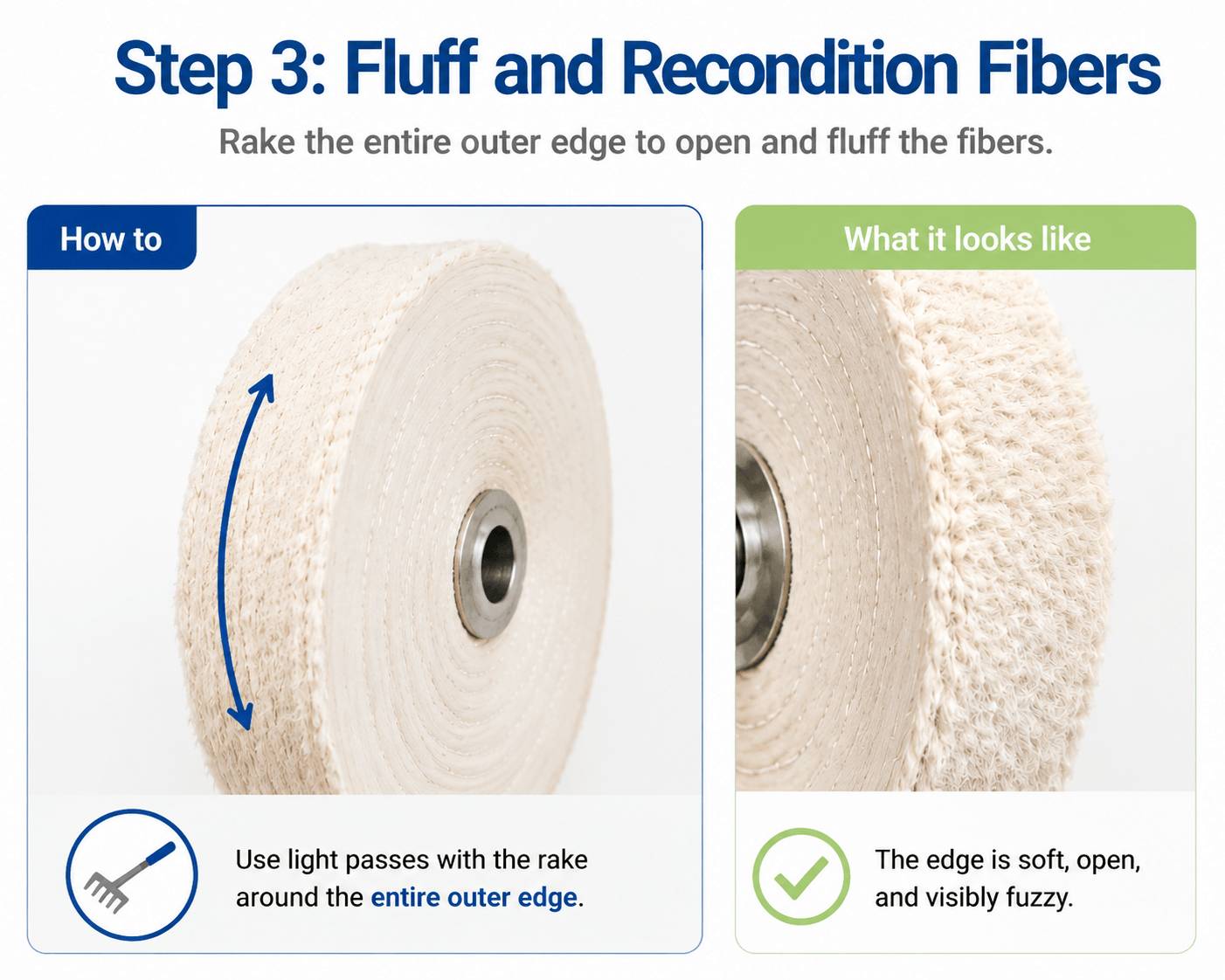
Stripping the crust is only the first half of reconditioning; you must now open the cotton weave so it can hold abrasive again.
A compacted wheel face lacks the capillary structure needed to retain binder wax. Take the rake teeth and make a few feather-light passes across the face of the wheel. You are aiming to lift and separate the cotton ends without tearing the stitching loose.
Inspect the wheel while it slows down: the perimeter should feel soft, open, and visibly fuzzy. These fluffed fiber bundles act like microscopic fingers, grabbing and suspending fresh abrasive particles across the entire contact patch.
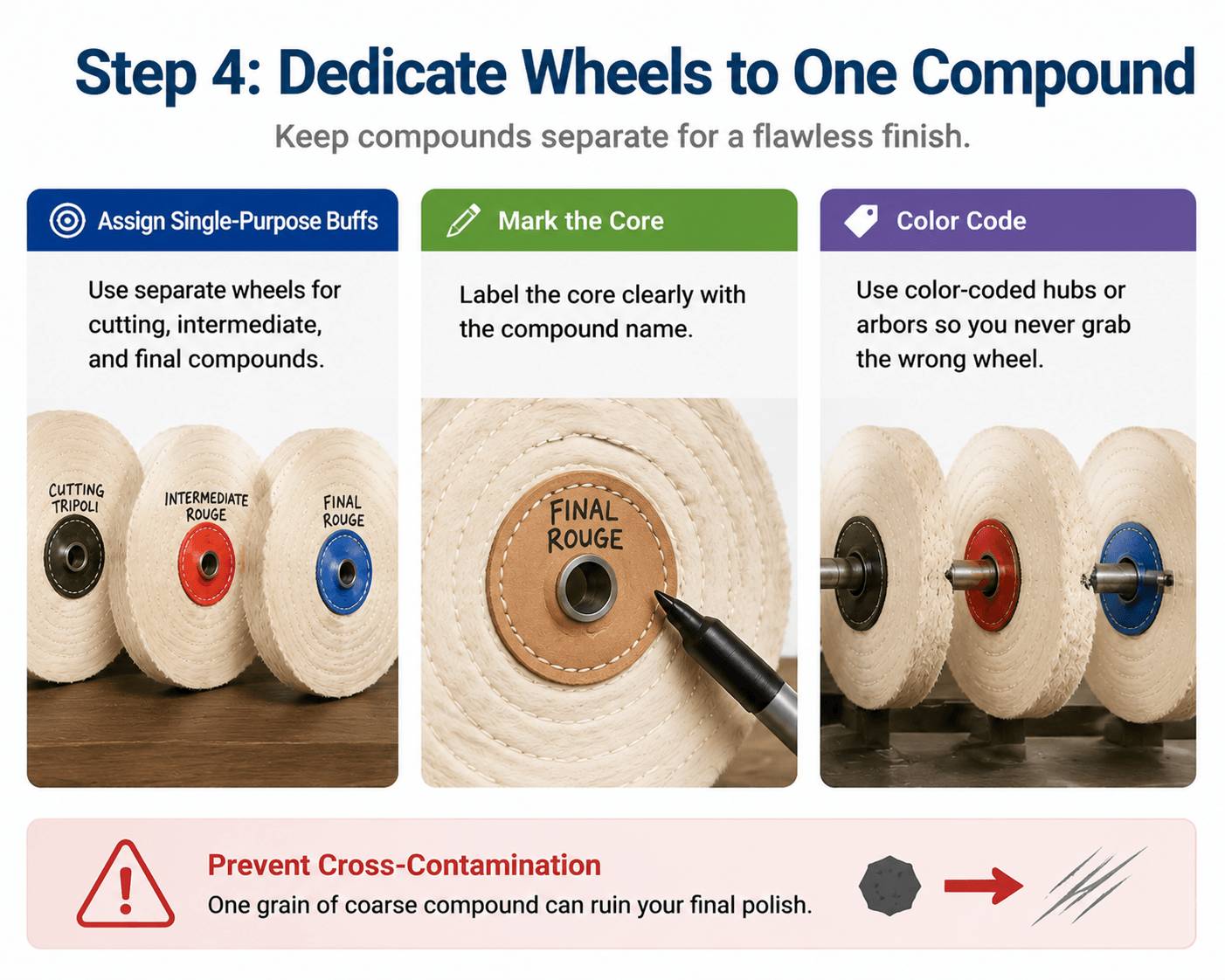
Cross-contamination is the most common reason a final polish turns out cloudy or scratched. A single coarse grain of black emery or brown tripoli lodged in a fine finishing wheel will ruin an 8,000-grit mirror finish.
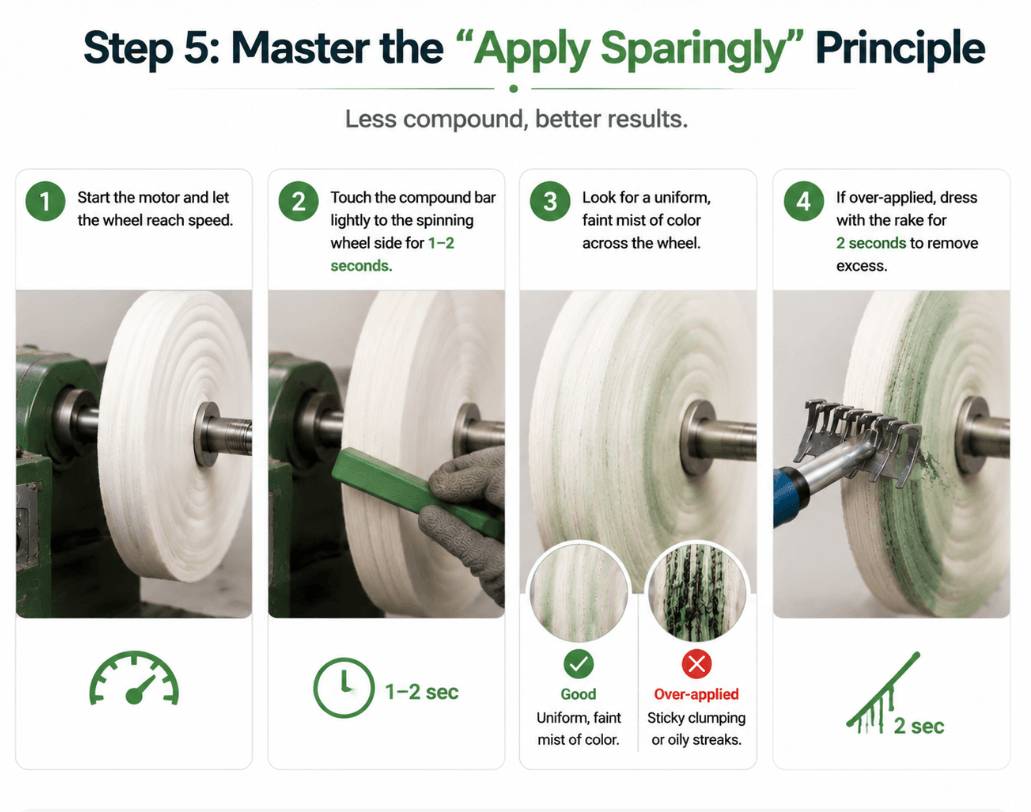
More compound does not equal faster cutting. Applying excessive compound floods the cotton plies, cools the contact zone, and accelerates glazing.
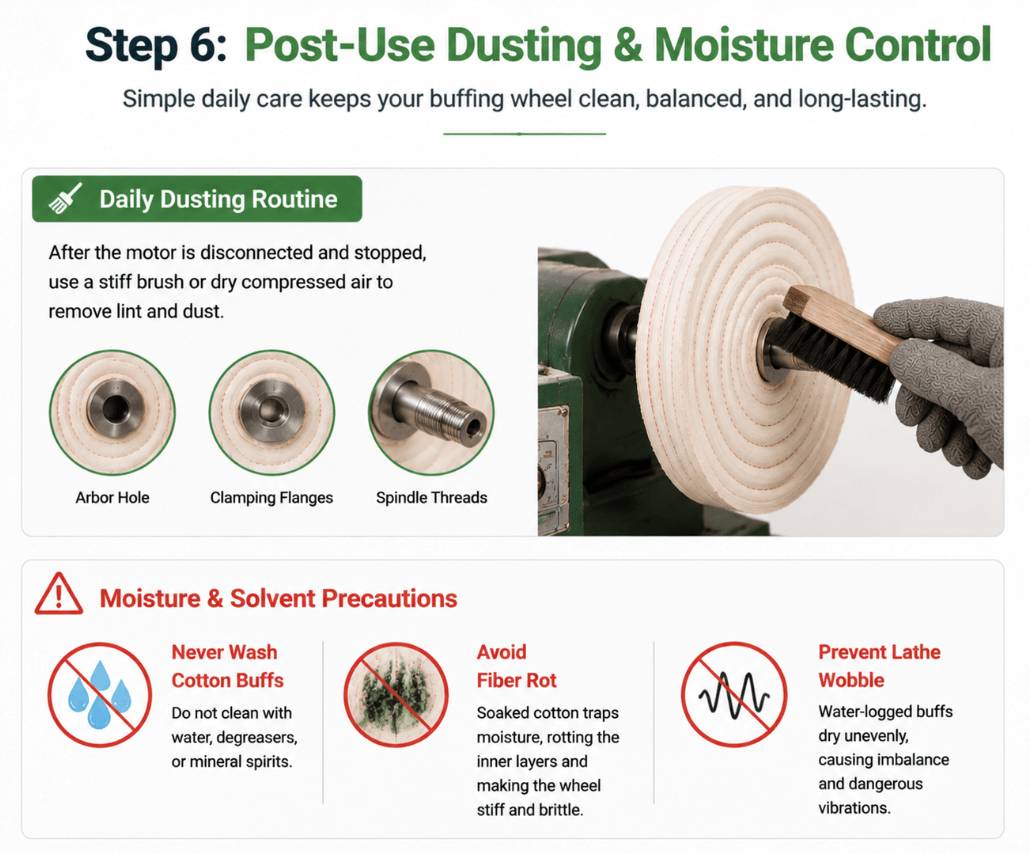
Routine daily maintenance prevents abrasive cross-transfer throughout your shop and shields the internal plies of the wheel from premature rot.
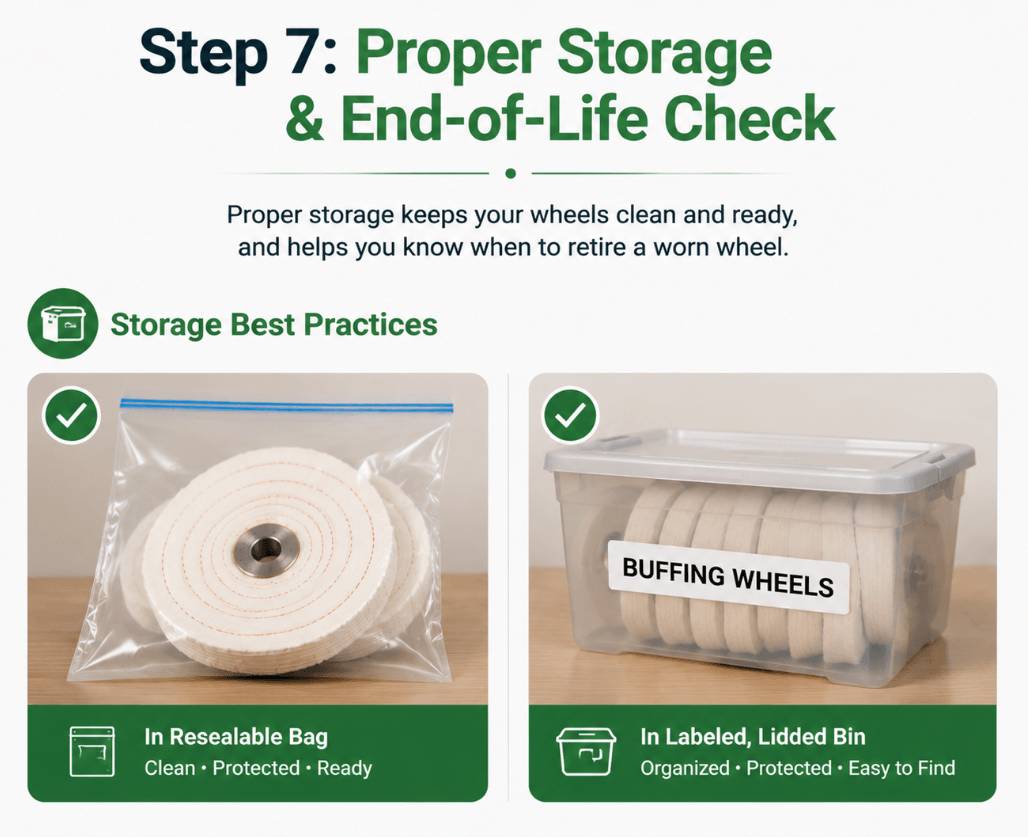
Proper storage keeps your consumables clean between jobs, while knowing when to retire a worn wheel protects the safety of your setup.
A: No. Water rots the inner stitching, hardens the cotton fibers once dry, and throws the wheel out of balance at high speeds. Always use a buffing rake to clean off old compound.
Q: How often should a buffing wheel be raked?
A: Rake whenever the face develops a hard, shiny crust or leaves dark streaks on your metal. In continuous production, a quick 2–3 second pass every 15 to 30 minutes keeps the fibers optimal.
Q: Are cleaning methods the same for stitched and loose buffing wheels?
A: Yes, but adjust your pressure. Stitched wheels tolerate firm rake pressure, while loose (unstitched) buffs require a gentle, skimming touch to avoid tearing the plies.
Q: What should I do if a buffing wheel starts throwing off long threads?
A: Stop the machine completely and snip the loose threads flush with sharp shears. Never pull threads by hand, as this unravels the inner weave.
Q: Why is my buffing wheel leaving dark, greasy smudges on the metal?
A: This is caused by compound buildup and glazing. Rake the wheel clean, fluff the fibers, and reapply only a 1-second tap of fresh compound.
When your wheels have reached the end of their service life and it is time to refresh your workshop supplies, explore the industrial-grade selection at Orobrush. As a premier cotton buffing wheels manufacturer and supplier, Orobrush produces a complete range of loose, spiral-stitched, and specialty-treated buffs built to withstand demanding workshop use. Whether you need standard inventory packs, bulk wholesale orders, or custom-dimension buffing wheels tailored to your exact manufacturing requirements, Orobrush delivers the reliable quality and balanced performance your finishing line demands.
Step 1: Safety & Setup First
Before touching any conditioning tool to a spinning arbor, set up your workstation to control flying fibers and microscopic debris.
- PPE Requirements: Put on a pair of impact-resistant safety goggles and a snug N95 dust mask (or half-mask respirator). Raking a wheel throws off dry compound cake and frayed lint in seconds.
- Apparel Safety: Tie back long hair, remove rings or loose wristwear, and roll your sleeves past your elbows. Loose fabrics near a high-torque polishing lathe are a serious entangling hazard.
- Dust Extraction: Turn on your workbench dust collection hood or local exhaust ventilation. Keep the airflow directed right behind the wheel to draw lint away from your line of sight.
Step 2: Rake the Glazed Compound
A glazed buffing wheel cannot accept fresh compound. You must physically strip away the packed crust using a dedicated buffing wheel rake. Never substitute a rake with screwdrivers, files, or saw blades, as non-dedicated tools can snag in the plies, kick back violently, or shatter under rotational torque.
- Power on your polishing lathe and set it to a low-to-medium speed (around 1,500 to 1,800 RPM is ideal for controlled dressing).
- Grip the handle of the buffing wheel rake firmly with both hands to maintain rigid control.
- Rest the rake against your tool rest or brace your arms securely, presenting the steel rake teeth to the lower outer edge of the wheel at a 45-degree angle.
- Move the teeth steadily across the rotating face with light, continuous contact. Let the teeth slice through the crust rather than jamming the rake into the cotton.
Step 3: Fluff and Recondition Fibers
Stripping the crust is only the first half of reconditioning; you must now open the cotton weave so it can hold abrasive again.
A compacted wheel face lacks the capillary structure needed to retain binder wax. Take the rake teeth and make a few feather-light passes across the face of the wheel. You are aiming to lift and separate the cotton ends without tearing the stitching loose.
Inspect the wheel while it slows down: the perimeter should feel soft, open, and visibly fuzzy. These fluffed fiber bundles act like microscopic fingers, grabbing and suspending fresh abrasive particles across the entire contact patch.
Step 4: Dedicate Wheels to One Compound
Cross-contamination is the most common reason a final polish turns out cloudy or scratched. A single coarse grain of black emery or brown tripoli lodged in a fine finishing wheel will ruin an 8,000-grit mirror finish.
- Assign Single-Purpose Buffs: Designate separate cotton wheels for cutting compounds, intermediate rouges, and fine coloring bars (such as Dialux Blue, Green, or White).
- Mark the Core: Use an oil-based marker on the leather center, plastic washer, or wooden hub to label the compound name clearly (e.g., "Tripoli Only" or "Final Rouge").
- Color Code: Store and handle each wheel using dedicated arbors or color-coded hub rings so you never mount the wrong buff by mistake.
Step 5: Master the "Apply Sparingly" Principle
More compound does not equal faster cutting. Applying excessive compound floods the cotton plies, cools the contact zone, and accelerates glazing.
- Turn on the motor and let the wheel reach standard operating speed.
- Touch the compound bar lightly against the spinning wheel face for 1 to 2 seconds. The friction heat will naturally melt just enough binder wax into the cotton.
- Look for a uniform, faint mist of color across the surface. If you see sticky, dark clumping or oily streaks throwing off the edge, you have over-applied.
Step 6: Post-Use Dusting & Moisture Control
Routine daily maintenance prevents abrasive cross-transfer throughout your shop and shields the internal plies of the wheel from premature rot.
Daily Dusting Routine
Once the motor is disconnected and completely stopped, use a stiff-bristle bench brush or a blast of dry compressed air to clear lingering lint around the arbor hole, clamping flanges, and spindle threads. Clearing dust now prevents it from baking onto the hub bearings over time.Moisture and Solvent Precautions
- Never Wash Cotton Buffs: Do not attempt to clean cotton buffing wheels with water, degreasers, or mineral spirits.
- Avoid Fiber Rot: Soaked cotton plies trap moisture deep inside the center stitching, rotting the structural core and leaving the fabric stiff and brittle once dry.
- Prevent Lathe Wobble: A water-logged buff will dry unevenly, creating severe dynamic imbalance that causes dangerous vibrations at high RPMs.
Step 7: Proper Storage & End-of-Life Check
Proper storage keeps your consumables clean between jobs, while knowing when to retire a worn wheel protects the safety of your setup.
Storage Best Practices
Store conditioned wheels in individual resealable Ziploc bags or stack them in labeled, lidded bins. This simple habit keeps ambient grinding dust, bench grit, and moisture out of your fine coloring buffs.When to Replace Your Cotton Buffing Wheel
| Checkpoint | What to Look For | Action Required |
| Diameter Loss | Outer diameter reduced by more than one-third of original size | Replace wheel (surface speed drops significantly) |
| Stitching Integrity | Spiral or concentric threads unravelling past structural lines | Cut loose threads immediately or retire wheel |
| Hub Stability | Leather center or lead hub loose, enlarged, or slipping on arbor | Discard immediately to prevent high-speed detachment |
| Fabric Condition | Cotton scorched dark brown/black from extreme thermal friction | Rake aggressively; if hard spots remain, replace wheel |
Frequently Asked Questions
Q: Can cotton buffing wheels be washed with water to remove compound?A: No. Water rots the inner stitching, hardens the cotton fibers once dry, and throws the wheel out of balance at high speeds. Always use a buffing rake to clean off old compound.
Q: How often should a buffing wheel be raked?
A: Rake whenever the face develops a hard, shiny crust or leaves dark streaks on your metal. In continuous production, a quick 2–3 second pass every 15 to 30 minutes keeps the fibers optimal.
Q: Are cleaning methods the same for stitched and loose buffing wheels?
A: Yes, but adjust your pressure. Stitched wheels tolerate firm rake pressure, while loose (unstitched) buffs require a gentle, skimming touch to avoid tearing the plies.
Q: What should I do if a buffing wheel starts throwing off long threads?
A: Stop the machine completely and snip the loose threads flush with sharp shears. Never pull threads by hand, as this unravels the inner weave.
Q: Why is my buffing wheel leaving dark, greasy smudges on the metal?
A: This is caused by compound buildup and glazing. Rake the wheel clean, fluff the fibers, and reapply only a 1-second tap of fresh compound.
Upgrade Your Polishing Workflow with Premium Cotton Buffs
Taking consistent care of your cotton buffing wheels protects your workpieces from unnecessary scratches, minimizes compound waste, and ensures every polishing cycle delivers clean, predictable shine.When your wheels have reached the end of their service life and it is time to refresh your workshop supplies, explore the industrial-grade selection at Orobrush. As a premier cotton buffing wheels manufacturer and supplier, Orobrush produces a complete range of loose, spiral-stitched, and specialty-treated buffs built to withstand demanding workshop use. Whether you need standard inventory packs, bulk wholesale orders, or custom-dimension buffing wheels tailored to your exact manufacturing requirements, Orobrush delivers the reliable quality and balanced performance your finishing line demands.