

Industry News
Best Dremel Buffing Wheels for Jewelry Polishing
When working with precious metals, using the wrong buffing wheel or excessive speed can overheat designs, cause micro-scratches, or result in costly metal loss. Moving beyond generic fluff, this guide evaluates six specialized Dremel buffing wheels for jewelry studios, focusing on three technical pillars: material compatibility, shank size, and compound combinations.
I. Quick Selection Matrix for Jewelry Polishing Wheels
To achieve a true specular reflection, you need a systematic approach rather than a single "magic" accessory. Use this matrix to match your specific processing stage with the correct wheel material.| Polishing Wheel Type | Material | Core Benefit | Processing Stage | Best-Suited Metals |
| Multi-functional Mixed Set | Wool / Cotton / Rubber | All-in-one kit with various shapes; ideal for multi-scenario use | All stages (Rough to Fine) | All jewelry metals |
| Soft Cotton Buffing Wheel | Stitched fine cotton | Ultimate mirror finish; completely scratch-free | Final polishing ("Coloring") | Sterling silver, Karat gold, pure 24K gold |
| Hard Compressed Wool Wheel | Dense felt | Strong cutting power; excellent flatness preservation | Pre-polishing; deep scratch removal | Platinum, brass, stainless steel |
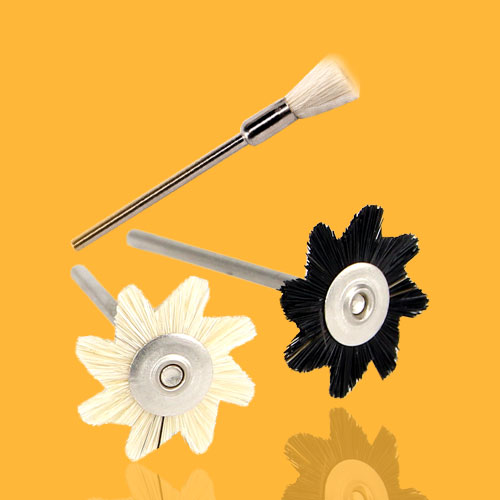
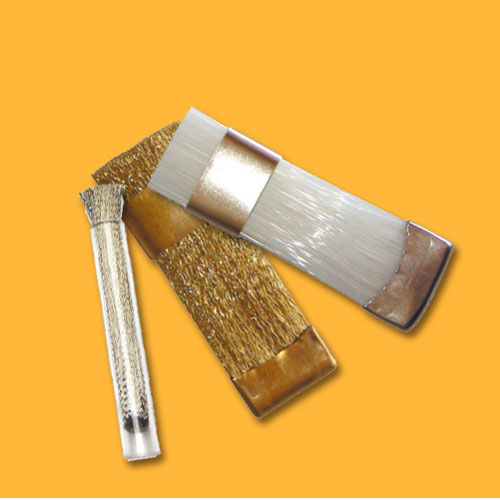
| Natural Bristle Brush Wheel | Goat hair / Horsehair | Excellent elasticity and deep reach into tight geometries | Cleaning prong settings and filigree/openwork | All metals (fine detailing) |
| Tapered/Bullet Wool Tip | Compressed felt | Perfectly contours to curved inner surfaces | Polishing inner bands of rings & bracelets | Precious metal ring shanks |
| Abrasive-Impregnated Silicone Wheel | Rubber base + Silicon Carbide | No polishing paste needed; efficient oxidation removal | Rapid refurbishment; removing file marks & burrs | Silver castings, antique jewelry |
II. In-depth Review: 6 Best Dremel Jewelry Polishing Wheels
A Crucial Note on Mandrel Shank Diameters: Standard Dremel buffing wheels and collets typically accept 3.2mm (1/8") shanks. However, industrial pendant drills and professional micromotor handpieces commonly used in jewelry manufacturing usually require 2.35mm (3/32") shanks. When purchasing your polishing consumables, always double-check that the mandrel shank diameter is perfectly compatible with your specific rotary tool's collet to avoid runout or mounting failures.1. Best Overall Assorted Kit: Multi-functional Jewelry Polishing Accessory Set
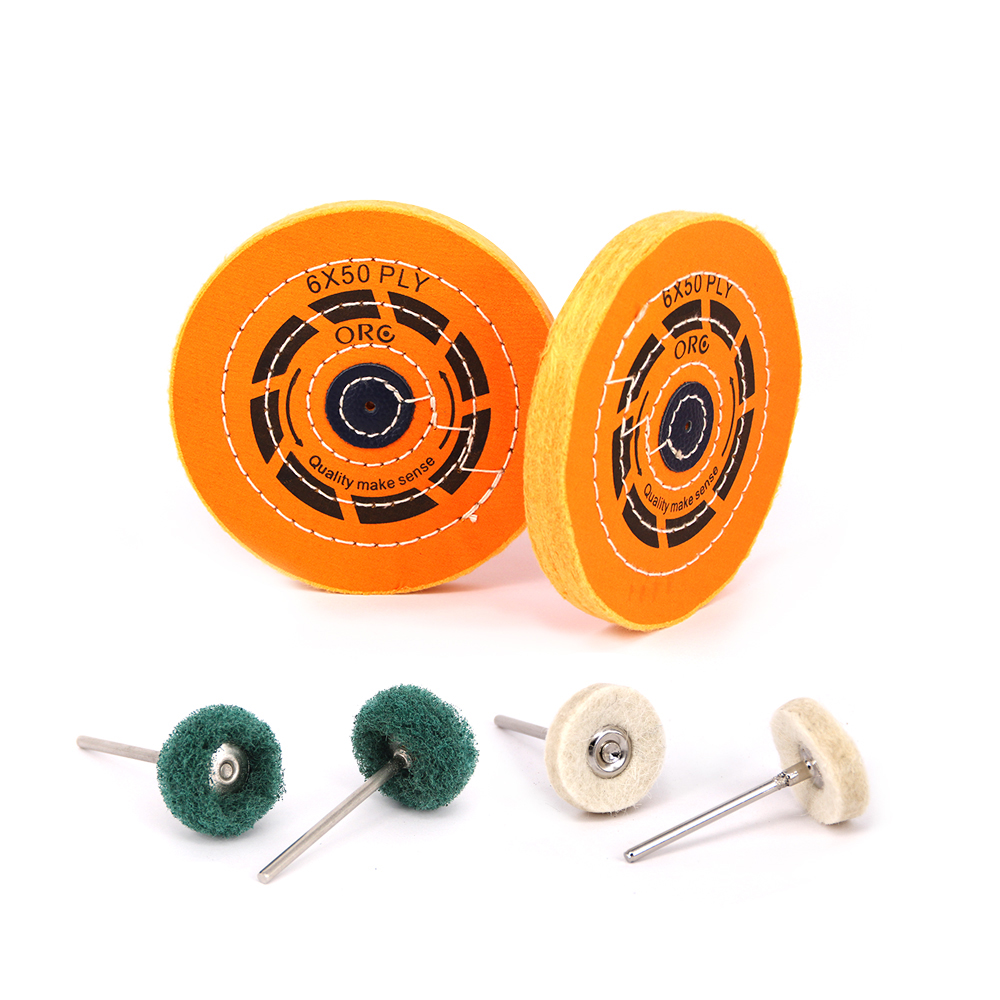
- Key Features: This versatile kit includes various shapes such as T-shaped wheels, bowl-shaped wheels, and bullet-shaped felt polishing bobs, all pre-mounted on standard 1/8" shank mandrels.
- Practical Value: In an artisan studio, no two jewelry pieces are identical. This assorted set solves a common bottleneck where single-shape wheels cannot fully cover the complex contours, steps, and valleys of irregularly shaped custom pieces.
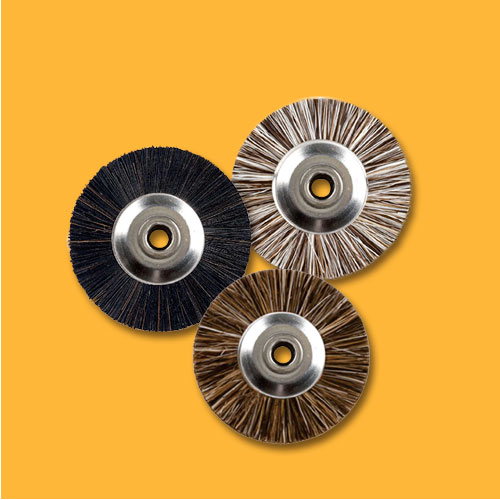
2.Best for Mirror Finish: Loose Muslin Cloth Buffs

- Key Features: Featuring a 1-inch disc-like structure, these wheels are made of multiple layers of finely woven, unstitched or loosely stitched cotton. This creates an extremely soft texture that flares out beautifully under rotation.
- Practical Tip: Loose cotton buffs are prone to shedding fibers and creating fine dust during their initial break-in period. Always follow the rigid rule of "one wheel, one compound." If a cloth buff contaminated with a coarse abrasive (like Tripoli) is later used to apply a fine mirror-finish rouge, the residual coarse grit will ruin the wheel's surface and leave a dense network of microscopic scratches across your sterling silver jewelry.
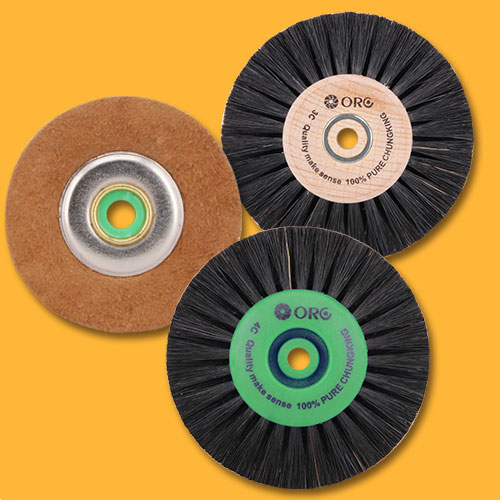
3.Best for Heavy Scratch Removal: Hard Density Felt Wheels

- Key Features: Manufactured from high-density compressed wool, these felt wheels feature rigid edges and an incredibly stable structure that delivers excellent cutting power.
- Practical Technique: These are your go-to accessories for removing stubborn file marks or smoothing out rough surfaces directly after initial sandpaper grading. Before using a brand-new hard felt wheel, you must "dress" it. Hold an old file lightly against the edge of the wheel while the Dremel is spinning at a low speed. This fluffs up the outer fibers just enough to properly hold your polishing compound.
4.Best for Filigree & Prongs: Mounted Goat Hair Brushes

- Key Features: Crafted from natural goat hair fibers, these miniature bristle brushes are significantly more heat-resistant than synthetic nylon options. They will not melt, glaze, or stick to the metal surface when subjected to high friction at rotary speeds.
- Practical Value: The fine bristles offer excellent structural elasticity and reach. They are ideal for driving polishing paste deep into hard-to-access areas—such as the tight bases of gemstone prong settings and intricate filigree wires—where flat cotton buffs simply cannot fit.
5.Best for Inside Ring Polishing: Bullet/Conical Felt Polishing Heads (Bobs)

- Key Features: Engineered with tapered, cylindrical, and conical profiles, these bobs are specifically shaped to fit perfectly against the concave inner walls (inside shanks) of rings and wedding bands.
- Practical Technique: When polishing an inner band, keep your Dremel handpiece horizontal while making slight, fluid angle adjustments, gliding smoothly along the internal curve. Avoid pressing hard or holding the spinning bob in one isolated spot for too long; doing so can quickly create flat spots and cause uneven wall thickness in precious metal rings.
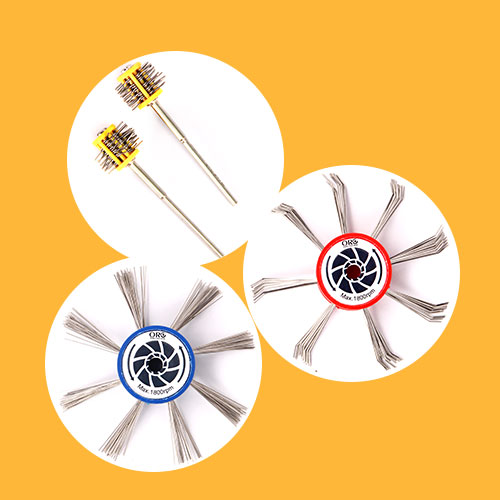
6.Best Time-Saver for Refurbishing and De-oxidizing: Silicone Rubber Polishers

- Key Features: These wheels eliminate the mess of traditional pastes. Micron-grade silicon carbide abrasive particles are infused directly into a flexible silicone rubber base, meaning no additional coarse polishing compound is needed.
- Practical Value: This is a game-changer for estate jewelers, pawn shops, or high-volume repair benches. Within seconds, these rubber polishers strip away heavy tarnish (blackened oxidation) from silver surfaces and smoothly blend away sharp burrs on raw castings without changing the underlying geometry of the piece.
III. The "Three-Step" Golden Trio for Jewelry Polishing
To achieve a true, high-end optical clarity on metal, you must move sequentially through distinct abrasive grits. Pairing the right wheel with the right compound is the secret to a flawless bench delivery.
- Step 1: Pre-Polishing (Smoothing and Leveling)
- Combination: Abrasive-impregnated silicone wheel (Item 6) or a hard density felt wheel (Item 3) paired with Tripoli (Brown Compound) or Grey Compound.
- Purpose: To rapidly level the casting skin, eliminate physical marks left by casting gates, and smooth out coarse file lines.
- Step 2: Buffing (Intermediate Brightening)
- Combination: A mix-set medium-density wool wheel (from Set 1) paired with Dialux Green or White Rouge.
- Purpose: To erase the fine cutting lines left by the pre-polishing stage, transition the metal into a semi-matte state, and build a uniform, soft sheen.
- Step 3: Final Coloring (Mirror Finish)
- Combination: Loose muslin cloth buffing wheel (Item 2) paired with Dialux Blue or traditional Red Rouge.
- Purpose: To burnish the metal at a microscopic level, fully bringing out its highly reflective, deep mirror finish (specular reflection).
IV. Standard Operating Procedures (SOP) for Bench Polishing

1. Safe Speed Management (RPM Control)
Maintain an operational speed between 12,000 – 15,000 RPM. Never run your rotary tool at its maximum speed capacity (30,000+ RPM). The extreme frictional heat generated by excessive linear speed will instantly scorch and carbonize the binder binders and waxes inside your polishing compound. This creates a stubborn, black crust on the gold or silver that is incredibly difficult to clean and can permanently pit the metal.2. Proper Loading of the Polishing Wheel
Apply your compound sparingly with a light touch. Start your Dremel and let the outer edge of the spinning buffing wheel lightly graze the polishing compound bar for 1–2 seconds. Never force or plunge the wheel deep into the compound block. Excess compound will simply build up on your workpiece, clogging intricate design details and splattering across your studio workspace.3. Polishing Technique and Pressure Control
Adopt a dynamic, continuous gliding motion and leverage the linear speed of the wheel's edge. Maintain a feather-light touch and keep the wheel moving constantly across the workpiece. Never dwell on a single spot, as the rotary friction can quickly melt sharp design edges. Rely entirely on the velocity of the spinning wheel to draw out the luster, rather than downward physical pressure applied by your fingers.4. Post-Polishing Deep Clean
The dark, greasy film left on your jewelry after a buffing session is wax-based residue from the compound. To reveal the true brilliance of your metalwork, scrub the piece gently with a soft-bristled toothbrush in 60°C soapy water, or clean it for 3–5 minutes in a professional ultrasonic cleaner utilizing a specialized, heated wax-removal solution.V. Three Major Pitfalls in Jewelry Polishing and Safety Precautions
- Pitfall 1: Gold Loss from Over-Processing: Frequent, undisciplined use of high-cut abrasive wheels and aggressive Tripoli compounds can rapidly reduce the structural thickness of your jewelry. For high-value custom pieces or delicate heirloom repairs, you must strictly limit the duration of your rough pre-polishing stage to preserve the metal's weight.
- Pitfall 2: Cross-Contamination of Abrasive Grits: Never mix multiple grades of polishing compounds on a single wheel. Once a coarse grit particle embeds itself into a soft cotton buff, it remains there permanently. It will continually introduce fine scratches during your final coloring steps, completely defeating the purpose of using a fine rouge.
- Safety Tip: Managing the Risk of Catching/Snagging: When handling delicate chains or prong-set rings, a spinning cloth wheel can instantly snag on an open link or a prong. This can instantly fling the jewelry piece across the room, damaging the setting, or wrap the chain tightly around your fingers. The Golden Rule: When polishing chain-style jewelry, always wrap the piece tightly around a flat wooden mandrel or peg, securing it flat so that you are only exposing a small, controlled section to the polishing accessory at any given time.
Conclusion
Mastering the art of jewelry finishing comes down to system design rather than a single tool. A flawless mirror finish isn't achieved by a single "magic" buffing wheel; it requires a systematic, multi-stage combination of tools spanning felt, cloth, bristle, and rubber, all tailored precisely to the hardness and melting point of your target metal. By controlling your rotary speed and executing a disciplined compound progression, you can consistently achieve factory-grade, high-quality finishes right in your independent studio.Looking to upgrade your bench workflow or stock up on professional-grade rotary consumables? Explore the full range of premium Dremel buffing wheels at Orobrush. As both an established supplier and a direct manufacturer, we offer unrivaled technical quality alongside competitive B2B wholesale options for commercial studios and jewelry repair businesses worldwide.