

Industry News
How to Choose the Best Felt Polishing Bobs for Rotary Tools
Whether you are a bench jeweler, mold maker, or dental technician, achieving a flawless mirror finish requires the right tools. Using the wrong felt polishing bob can lead to handpiece misalignment, deep micro-scratches, or burned workpieces. This quick guide breaks down the four pillars of choosing the best felt bobs—shank diameter, shape, hardness, and compound pairing—so you get pristine surface finishes every time.
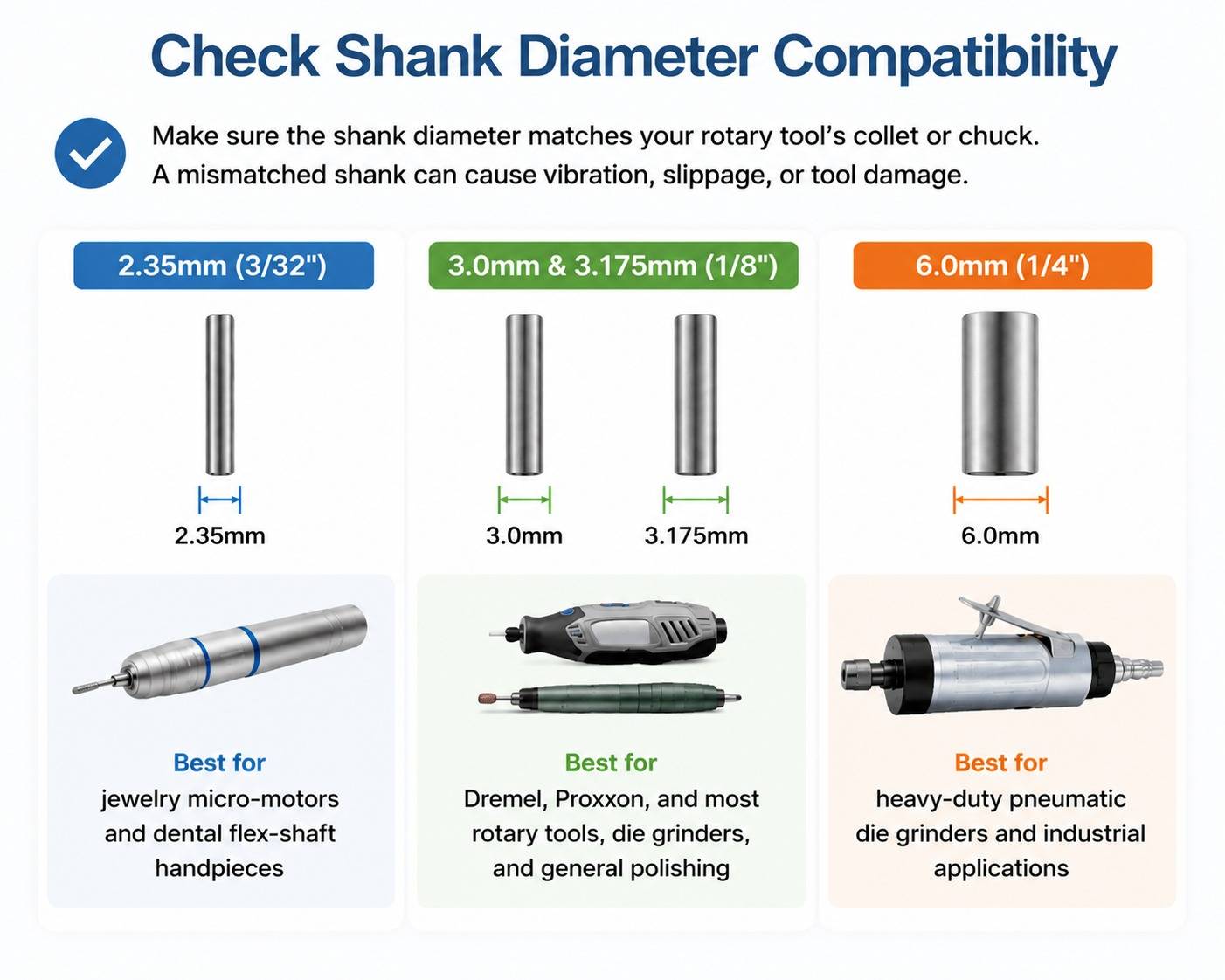
Before assessing felt shapes or densities, you must verify that the shank (mandrel) diameter matches your rotary tool’s collet or 3-jaw chuck. Installing a mismatched shank will lead to severe eccentricity, excessive vibration, or chuck failure.
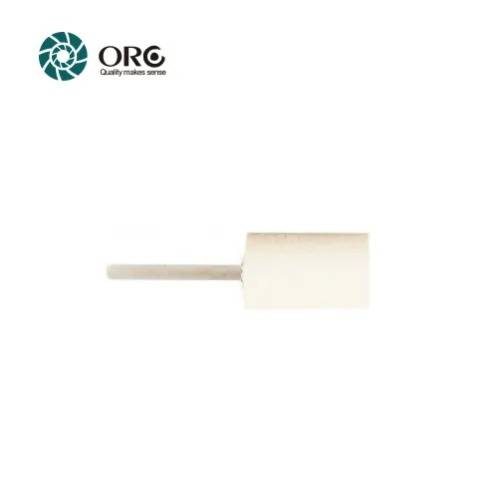
The go-to choice for flat surfaces, exterior curves, and wide-open contours. Cylindrical bobs distribute pressure evenly across their full length, making them efficient for removing light sanding lines on flat plate stock, signet ring shanks, or flat mold inserts.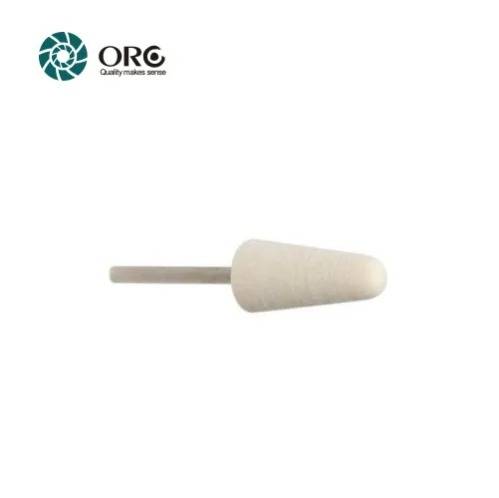
Designed specifically for intricate geometries. The tapered point reaches into sharp internal corners, narrow channels, bevels, and small hole interiors. Jewelers rely on pointed cones to polish inside ring under-galleries and prongs without rounded-off critical edges.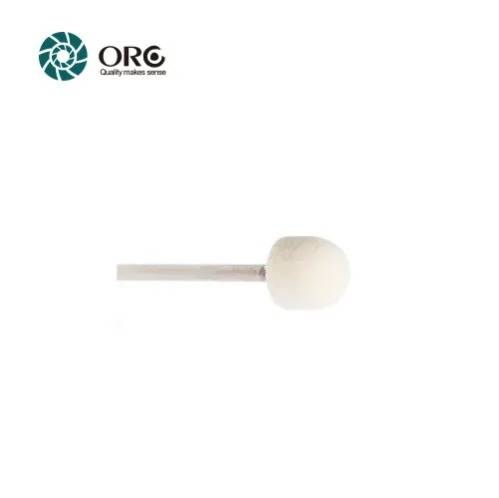
Ideal for concave surfaces, radiused pockets, and spherical cavities. Ball-shaped bobs allow smooth multi-axis movement inside mold cavities, spoon shapes, or carved gemstone mountings without digging in.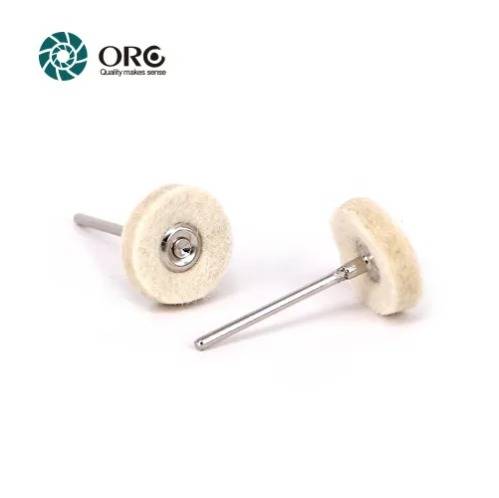
Best suited for narrow slots, internal grooves, and edge profiling. Felt wheels allow you to polish precise recessed lines and interdental spaces on dental bridges or clean out thread grooves in metal components.
Always follow the "One Paste, One Bob" rule. Never apply a fine finishing compound (like Red Rouge) to a felt bob that previously held a coarse cut-down paste. Coarse abrasive grains remain trapped in the wool fibers and will scratch your mirror finish. Store your used bobs in individually labeled sealable bags.
Whether you operate a commercial jewelry studio, manage a mold manufacturing workshop, or refine custom hardware in your garage, matching your equipment specifications to your workflow yields better finishes in less time.
Step 1: Check Shank Diameter Compatibility
Before assessing felt shapes or densities, you must verify that the shank (mandrel) diameter matches your rotary tool’s collet or 3-jaw chuck. Installing a mismatched shank will lead to severe eccentricity, excessive vibration, or chuck failure.
- 2.35mm (3/32") Shanks: The standard specification across professional jewelry micro-motors (e.g., Marathon, Bader) and dental pendant flex-shaft handpieces. These slim mandrels allow precise, micro-level control inside tight settings.
- 3.0mm & 3.175mm (1/8") Shanks: The universal standard for consumer and commercial rotary tools like Dremel, Proxxon, and standard pneumatic die grinders. Ideal for general hardware polishing, mold repair, and hobbyist projects.
- 6.0mm (1/4") Shanks: Engineered for industrial-grade, heavy-duty pneumatic die grinders. These heavy-duty steel shanks withstand high torque and lateral pressure during heavy deburring and polishing on large steel molds or structural fabrications.
Step 2: Select the Head Shape Based on Workpiece Geometry
Pure compressed wool can be machined into specialized geometries. Matching the contour of your felt bob to the geometry of your workpiece ensures uniform contact pressure and prevents premature wear on the edges of the tool.Cylinder / Barrel
The go-to choice for flat surfaces, exterior curves, and wide-open contours. Cylindrical bobs distribute pressure evenly across their full length, making them efficient for removing light sanding lines on flat plate stock, signet ring shanks, or flat mold inserts.
Cone / Pointed
Designed specifically for intricate geometries. The tapered point reaches into sharp internal corners, narrow channels, bevels, and small hole interiors. Jewelers rely on pointed cones to polish inside ring under-galleries and prongs without rounded-off critical edges.
Ball / Spherical
Ideal for concave surfaces, radiused pockets, and spherical cavities. Ball-shaped bobs allow smooth multi-axis movement inside mold cavities, spoon shapes, or carved gemstone mountings without digging in.
Wheel / Disc
Best suited for narrow slots, internal grooves, and edge profiling. Felt wheels allow you to polish precise recessed lines and interdental spaces on dental bridges or clean out thread grooves in metal components.
Mounted vs. Unmounted (Thread-Lock) Bobs
- Mounted Bobs: The felt head is permanently bonded or vulcanized onto a solid steel shank. They deliver superior concentricity, higher precision, and zero wobble—making them ideal for delicate high-RPM work.
- Unmounted Wheels (Thread-Lock Mandrels): These feature a center hole mounted onto a reusable screw-mandrel. While slightly less concentric than solid-mounted bobs, they offer a cost-effective solution for high-volume, quick-change industrial applications.
Step 3: Match Felt Hardness and Density
Felt polishing bobs are manufactured by compressing pure wool fibers under high heat and pressure. The resulting density directly dictates how the bob handles cutting action and heat dissipation.| Felt Grade | Structural Characteristics | Primary Applications & Materials |
| Hard / High-Density | Rigid, dense structure with minimal flex under load. High stock removal capability. | Rough Polishing & Pre-Finishing: Rapid scratch removal on tool steel, titanium, and hard alloys. Ideal for use with coarse pastes or diamond compounds. |
| Soft / Medium-Density | Yielding, highly flexible fibers that conform easily to complex surface contours. | Final Mirror Finishing: Brightening soft precious metals (high-karat gold, fine silver) without leaving micro-ridges or drag lines. |
Step 4: Pair with the Correct Polishing Compound
A felt bob serves as a vehicle; the abrasive compound applied to it performs the actual micro-cutting. Using the wrong combination can drag out production times or ruin surface reflectivity.- Yellow / White Rouge + Hard Felt: Best for initial cut-down and heavy scratch removal on brass, copper, and stainless steel hardware.
- Green Compound (Chromium Oxide) + Medium/Hard Felt: The industry-standard all-rounder. Delivers a brilliant mirror finish on stainless steel, aluminum, brass, and hardened mold steels.
- Red Rouge (Jeweler's Rouge) + Soft Felt: Formulated specifically for precious metals. Combined with soft wool, it yields a deep, rich, haze-free reflection on gold and sterling silver.
- Diamond Abrasive Paste + High-Density Hard Felt: Essential for ultra-hard materials. Highly effective for precision polishing of tungsten carbide dies, technical ceramics, and hardened injection molds.
Always follow the "One Paste, One Bob" rule. Never apply a fine finishing compound (like Red Rouge) to a felt bob that previously held a coarse cut-down paste. Coarse abrasive grains remain trapped in the wool fibers and will scratch your mirror finish. Store your used bobs in individually labeled sealable bags.
Expert Tips for Operation and Maintenance
To maximize the service life of your felt bobs and maintain consistent surface quality, implement these operational practices:1. Optimize Your RPM
Polishing requires a balance of moderate speed and compound friction—not excessive rotational speed.- Running at excessively high RPM causes centrifugal force to sling the compound off the head, creates friction heat that scorches the wool, and risks thermal damage to delicate workpieces.
- Best Practice: Start your rotary tool at low-to-medium speeds (typically 5,000 to 12,000 RPM depending on head diameter) and let the abrasive compound do the cutting.
2. Control Contact Pressure
Let the tips of the wool fibers and the abrasive paste do the work. Applying heavy downward pressure flexes the mandrel shaft, causes uneven wear, generates excess heat, and risks detaching the felt head from its shank. Light, continuous sweeping motions deliver the cleanest finish.3. Dressing and Cleaning Spent Felt
Over time, felt bobs become clogged with caked-on compound residue, metal swarf, and oxidized debris (a condition known as "loading").- How to Clean: While the tool is running at a low speed, lightly touch a serrated hacksaw blade, a dress stone, or a dedicated dressing block against the rotating felt head. This strips away glaze, removes embedded metal debris, and exposes fresh, soft wool fibers ready for a new coat of compound.
Summary
To select the ideal felt polishing bob every time, follow this streamlined four-step approach: verify shank size, select head geometry, determine felt density, and match with the correct compound.Whether you operate a commercial jewelry studio, manage a mold manufacturing workshop, or refine custom hardware in your garage, matching your equipment specifications to your workflow yields better finishes in less time.