

Industry News
How to Choose the Best Polishing Brush for Gold
Polishing gold requires balancing a mirror finish with minimal metal loss. Every milligram counts. Choosing the right polishing brush prevents surface gouging and protects your bottom line. This professional guide helps you select the perfect tool for every stage of your workflow.
At Orobrush, we understand the technical demands of the jewelry trade. We specialize in high-performance brushes designed for professional goldsmiths and dental labs. Whether you need a single specialized end brush or a bulk shipment for a factory floor, we are ready to supply you. Explore our full catalog of jewelry polishing tools today and experience the difference that professional-grade equipment makes. We fully support B2B transactions and bulk wholesale orders worldwide.
Step 1: Assessing the Purity and Hardness of Gold
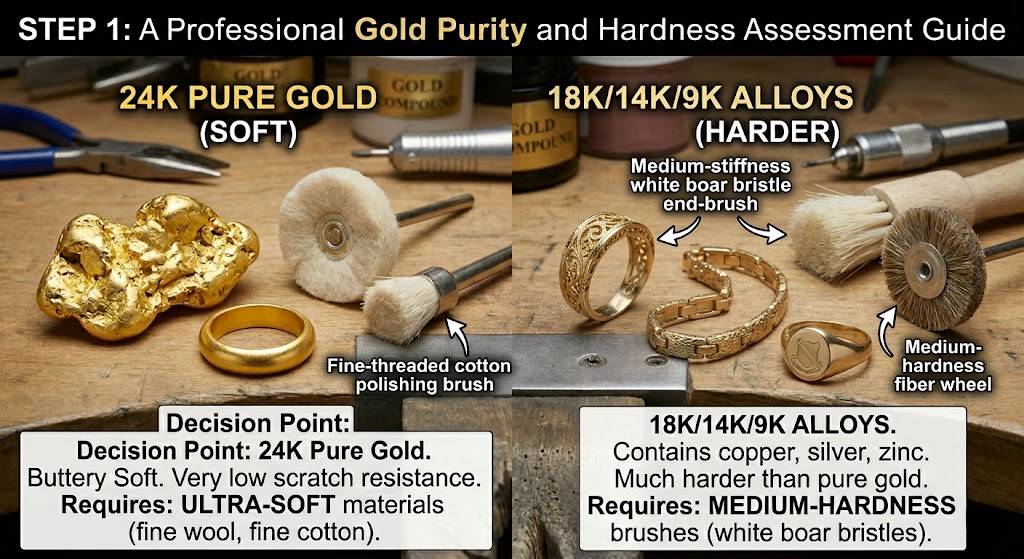
Gold isn't a "one size fits all" metal. Its hardness changes based on its Karat.
Decision Point: 24K Pure Gold vs. Alloys (18K/14K/9K)
- 24K Pure Gold: This is buttery soft. It scratches if you even look at it wrong. For high-purity gold, stick to ultra-soft materials. Think fine wool or very fine cotton thread. Anything stiffer will leave deep micro-scratches.
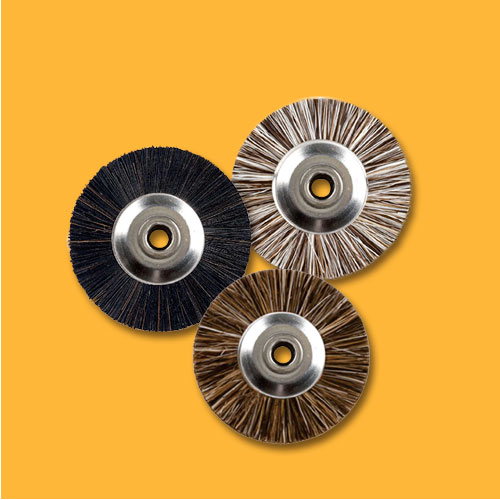
- 18K/14K/9K Alloys: These contain copper, silver, or zinc. They are much harder than pure gold. For these alloys, you can start with medium-hardness brushes. White boar bristles are excellent for initial cleaning and pre-treatment.
Step 2: Determine the Processing Stage
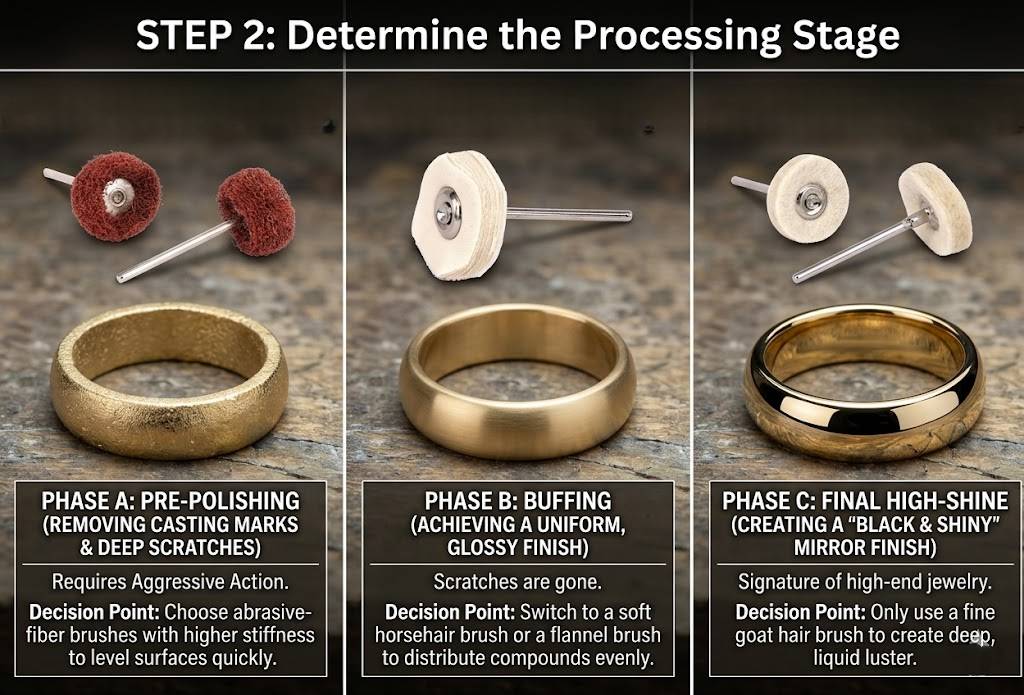
Are you removing a casting mark or finishing a wedding band? Your stage dictates your brush choice.
Phase A: Pre-polishing
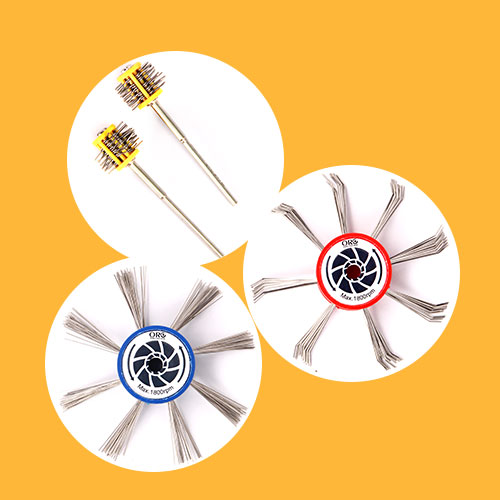
The surface has casting marks or deep scratches. You need aggressive action here.- Decision: Choose a bristle brush with higher stiffness. A fiber wheel also works well. These tools level the surface quickly.
Phase B: Buffing
The deep scratches are gone. Now you need a uniform, glossy finish.- Decision: Switch to a soft horsehair brush or a flannel brush. These distribute polishing compounds evenly without aggressive cutting.
Phase C: Final High-Shine
This is the "black and shiny" mirror finish. It is the signature of high-end jewelry.- Decision: Only use a muslin wheel or a fine goat hair brush. These materials are gentle. They create that deep, liquid luster.
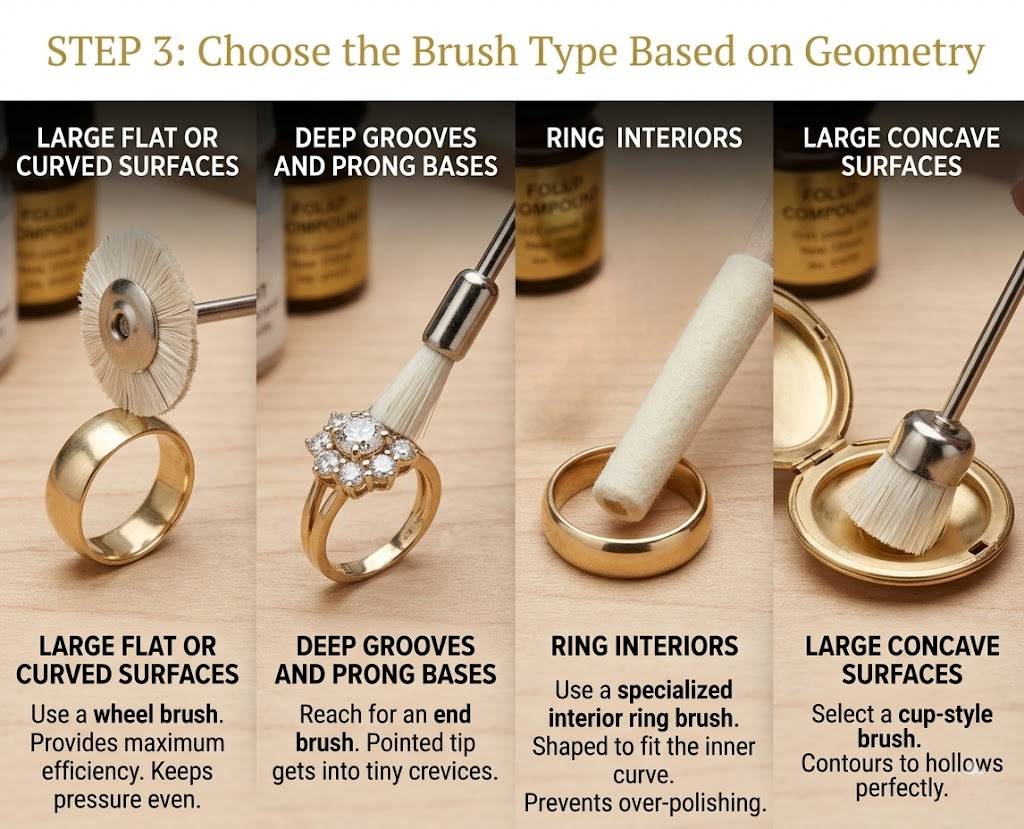
Step 3: Choose the Brush Type Based on Geometry
The shape of your jewelry determines the shape of your polishing brush.
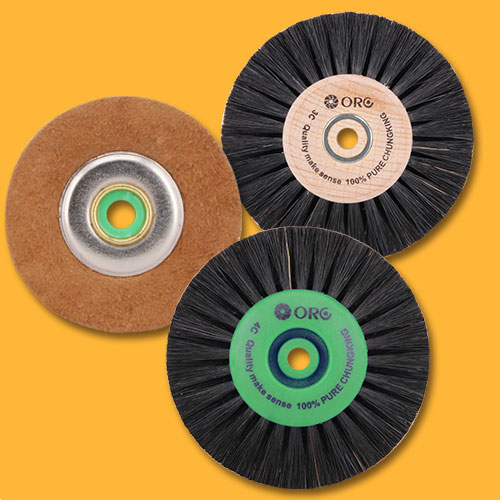
- Large Flat or Curved Surfaces: Use a wheel brush. It provides maximum efficiency. It keeps pressure even across the metal.
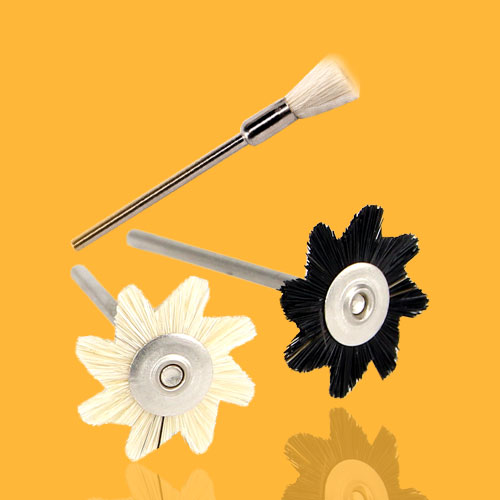
- Deep Grooves and Prong Bases: Reach for an end brush. Its pointed tip gets into tiny crevices. This is vital for stone settings.
- Ring Interiors: Use a specialized interior ring brush. It is shaped to fit the inner curve. It prevents over-polishing the edges. Over-polishing can deform the ring's fit.
- Large Concave Surfaces: Select a cup-style brush (Cup Brush). It contours to the hollows of lockets or bowls perfectly.
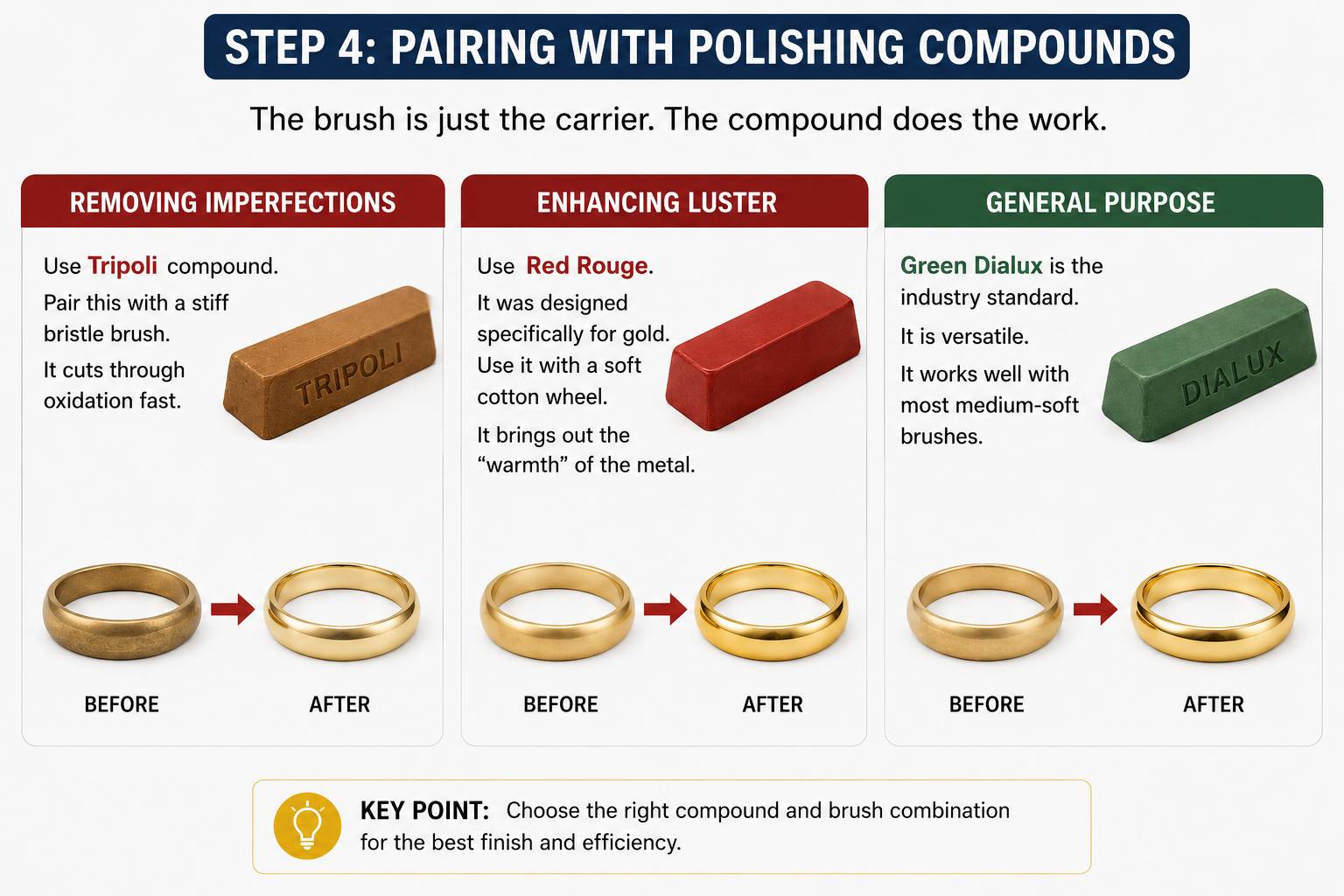
Step 4: Pairing with Polishing Compounds
The brush is just the carrier. The compound does the work.
- Removing Imperfections: Use Tripoli compound. Pair this with a stiff bristle brush. It cuts through oxidation fast.
- Enhancing Luster: Use Red Rouge. It was designed specifically for gold. Use it with a soft cotton wheel. It brings out the "warmth" of the metal.
- General Purpose: Green Dialux is the industry standard. It is versatile. It works well with most medium-soft brushes.
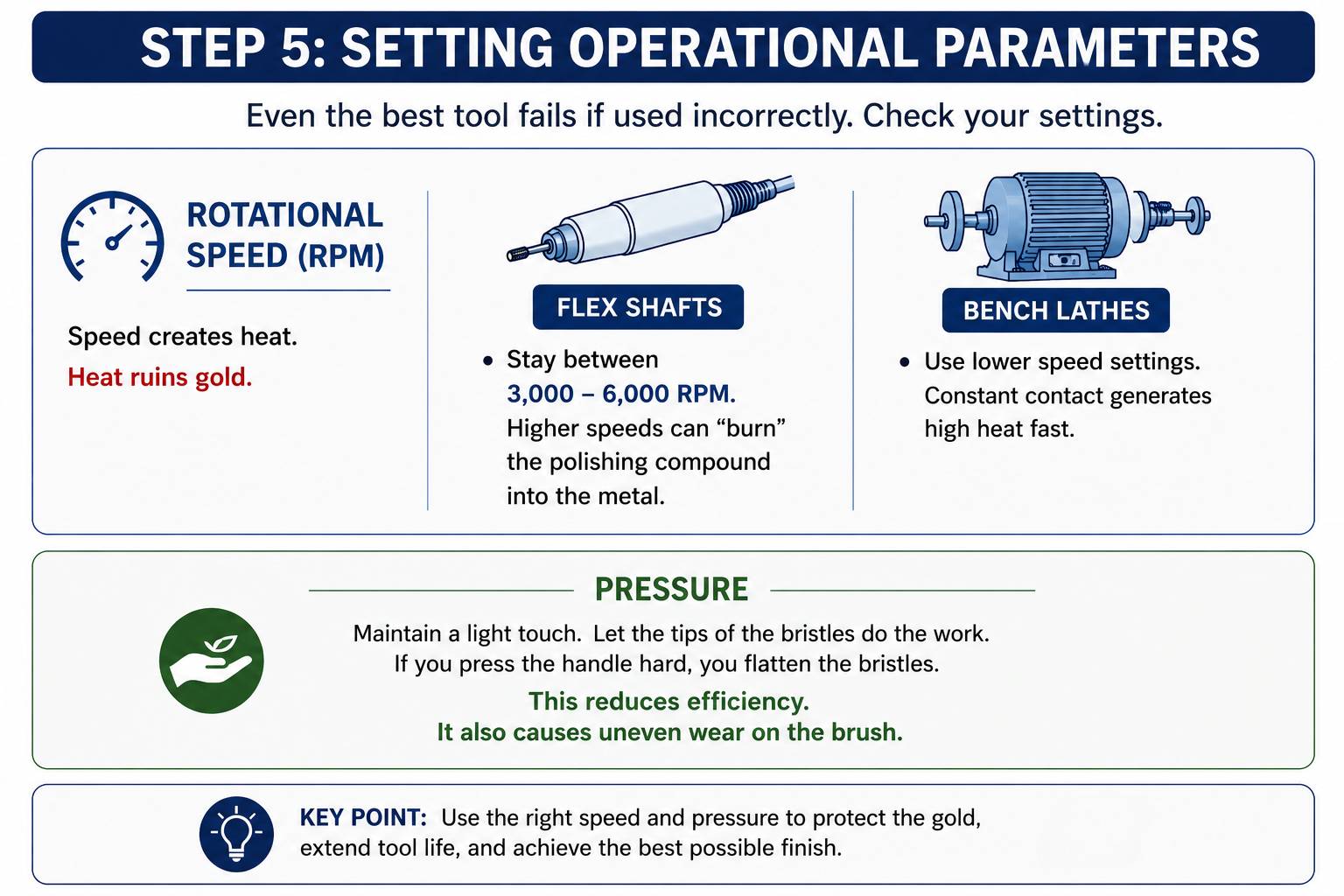
Step 5: Setting Operational Parameters
Even the best tool fails if used incorrectly. Check your settings.
Rotational Speed (RPM)
Speed creates heat. Heat ruins gold.- Flex Shafts: Stay between 3,000 – 6,000 RPM. Higher speeds can "burn" the polishing compound into the metal.
- Bench Lathes: Use lower speed settings. Constant contact generates high heat fast.
Pressure
Maintain a light touch. Let the tips of the bristles do the work. If you press the handle hard, you flatten the bristles. This reduces efficiency. It also causes uneven wear on the brush.Decision Summary Table
| If your workpiece is... | And your goal is... | You should choose... |
| 18K Ring Interior | Deburring | Boar Bristle Pen Brush + Tripoli |
| 24K Pure Gold Pendant | Mirror Finish | Ultra-fine Wool Cup Brush + Red Rouge |
| 9K Gold Large Surface | Rapid Shine | Cotton Buffing Wheel + Green Dialux |
Conclusion
Choosing the right polishing brush is about respecting the metal. By matching the brush material to the gold's purity and the piece's geometry, you ensure a world-class finish with minimal waste. Precision matters.At Orobrush, we understand the technical demands of the jewelry trade. We specialize in high-performance brushes designed for professional goldsmiths and dental labs. Whether you need a single specialized end brush or a bulk shipment for a factory floor, we are ready to supply you. Explore our full catalog of jewelry polishing tools today and experience the difference that professional-grade equipment makes. We fully support B2B transactions and bulk wholesale orders worldwide.