

Industry News
How to Choose the Right Dremel Buffing Wheel
Choosing the wrong Dremel buffing wheel can permanently scratch expensive jewelry or scorch your workpiece. The golden rule of polishing is simple: your material dictates the wheel, the wheel determines the compound, and your workload defines the required accessory grade.
Dremel rotary tools operate at extremely high speeds. This high speed makes it very easy to make costly mistakes.
Are you polishing plastics, resins, or jewelry embedded with gemstones? If so, you must select a soft polishing wheel. It must be designed to perform effectively at low speeds. Stay between 5,000 and 10,000 RPM.
Excessive speed generates extreme friction. It can cause plastics to melt instantly. It will also cause your polishing compound to be flung uncontrollably across your workspace. Go slow.
However, professionals face different demands. If you run a professional refurbishment studio or a dental lab, you must consider strict metrics:
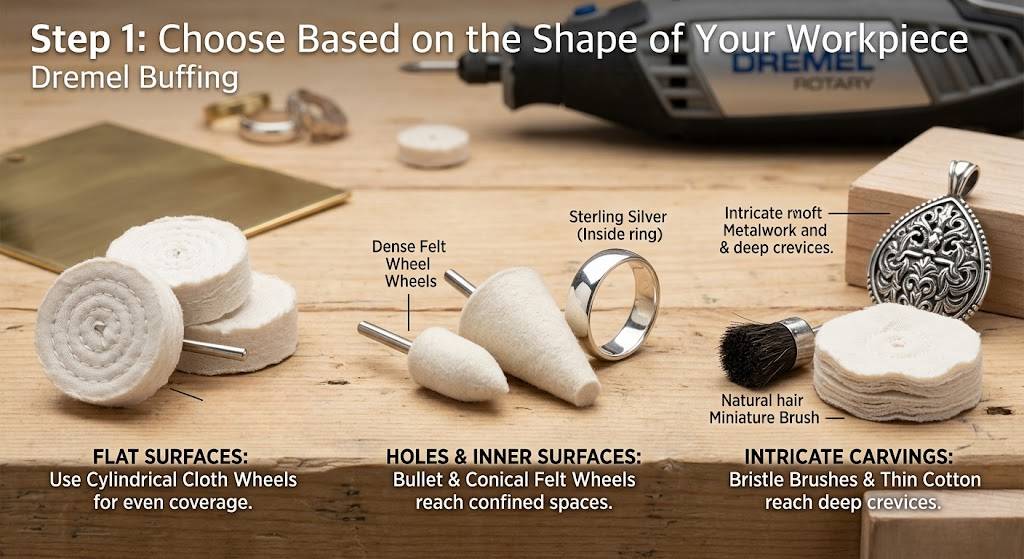
Step 1: Choose Based on the Shape of Your Workpiece
The geometry of your part dictates your tool. Look closely at the item you are polishing.
- Flat Surfaces: Choose cylindrical wheels. Large-diameter cloth wheels work best here. They cover wide areas evenly and efficiently.
- Holes & Inner Surfaces: Think about inside rings or drilled holes. Choose bullet-shaped felt wheels. Conical wheels are also excellent. They fit perfectly into confined spaces.
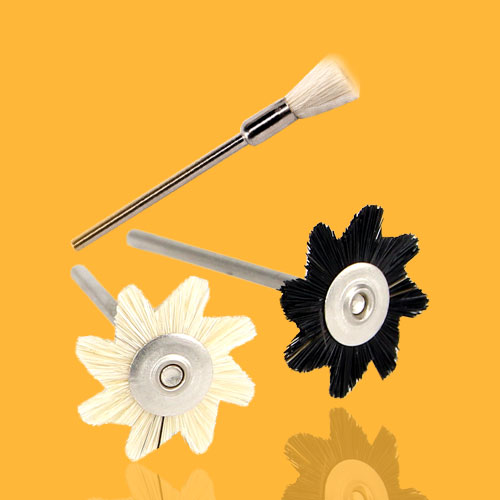
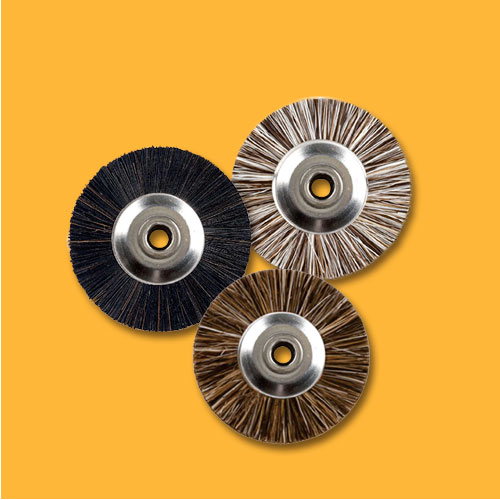
- Intricate Carvings & Crevices: Detailed metalwork demands flexibility. Choose bristle brushes. Extremely soft, thin cotton cloth wheels also reach deep into tight spaces.
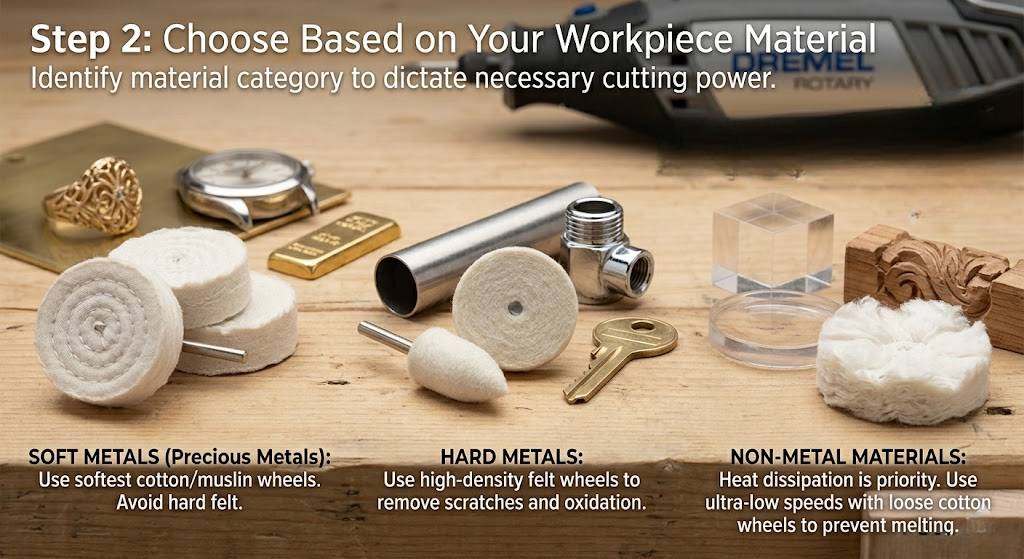
Step 2: Choose Based on Your Workpiece Material
Before selecting a wheel, identify your workpiece category. This dictates your necessary cutting power.
- Soft Metals (Precious Metals): This includes 24K/18K gold, sterling silver, and platinum. You must use the softest cotton or muslin wheels. These delicate materials wear away easily. Hard felt wheels will leave deep, irreparable gouges.
- Hard Metals: This covers stainless steel, chrome, titanium, and brass. You can safely use high-density felt wheels here. They provide enough cutting power to strip away scratches and stubborn oxidation.
- Non-Metal Materials: Think acrylic, epoxy resin, or wood. Heat dissipation is your absolute top priority. We highly recommend using extremely loose cotton wheels. Always pair these with ultra-low speeds. Otherwise, your material will instantly melt or scorch.
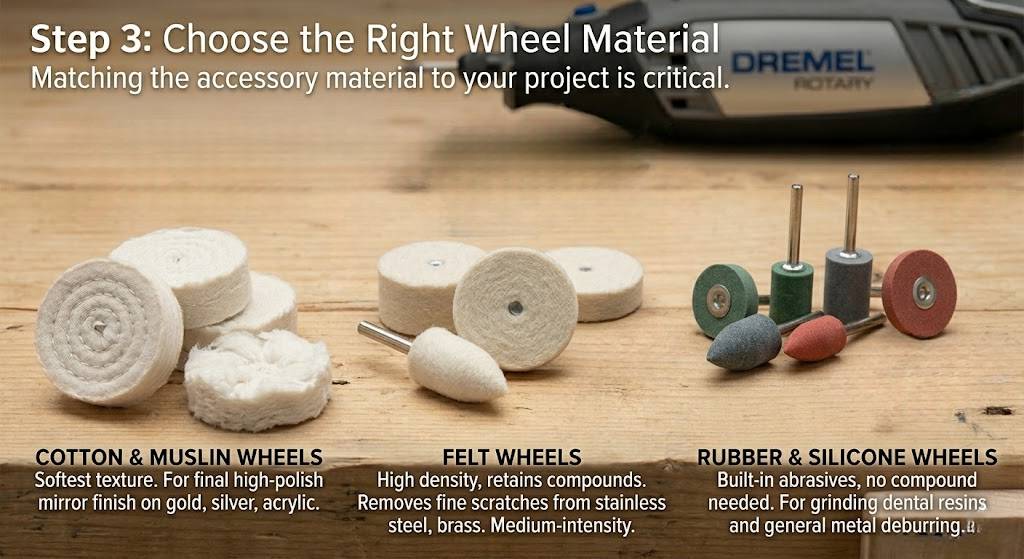
Step 3: Choose the Right Wheel Material
Matching the accessory material to your project is critical.
- Cotton & Muslin Wheels: These offer the softest texture available. Choose them for a final high-polish mirror finish. They work beautifully on gold, silver, or delicate acrylic materials.
- Felt Wheels: These feature high density. They strongly retain polishing compounds. Choose these to remove fine scratches from stainless steel or brass surfaces. They are ideal for medium-intensity polishing.
- Rubber & Silicone Wheels: These contain built-in abrasives. You need no extra compound. Choose these for grinding dental resins. They are also perfect for general metal deburring.
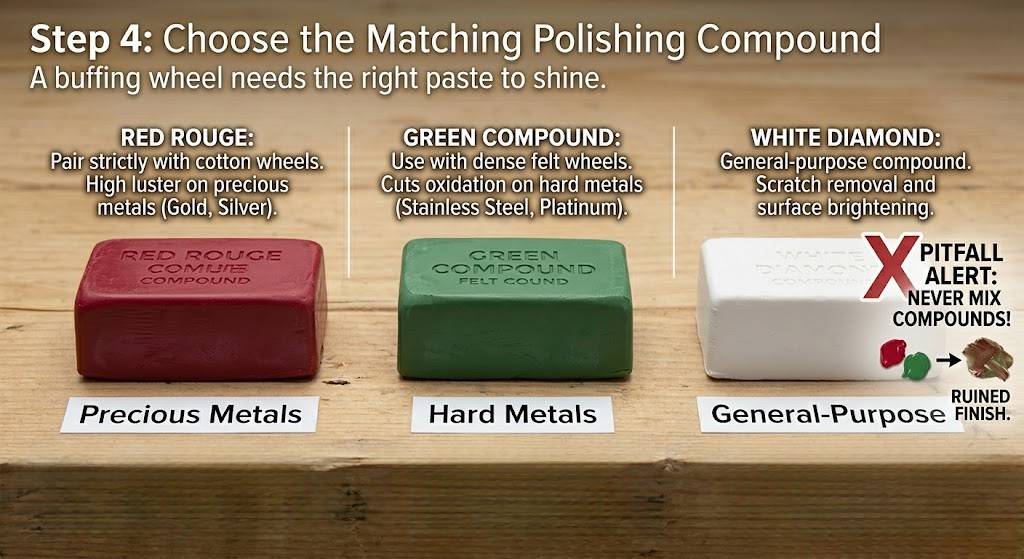
Step 4: Choose the Matching Polishing Compound
A buffing wheel needs the right paste to shine.
- Red Rouge: Pair this strictly with cotton wheels. It brings out the highest luster on precious metals like gold and silver.
- Green Compound: Use this with dense felt wheels. It cuts through oxidation on hard metals, including stainless steel and platinum.
- White Diamond: This is a fantastic general-purpose compound. Use it for overall scratch removal and surface brightening.
- Pitfall Alert: Never mix compounds! Do not put two different colors of polishing compound on the same wheel. This cross-contamination will ruin your finish.
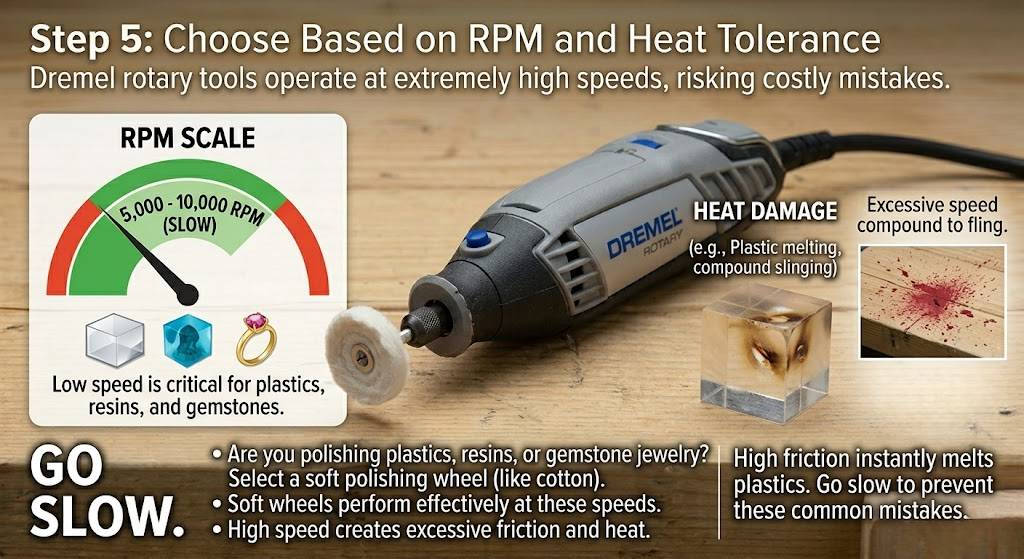
Step 5: Choose Based on RPM and Heat Tolerance
Dremel rotary tools operate at extremely high speeds. This high speed makes it very easy to make costly mistakes.
Are you polishing plastics, resins, or jewelry embedded with gemstones? If so, you must select a soft polishing wheel. It must be designed to perform effectively at low speeds. Stay between 5,000 and 10,000 RPM.
Excessive speed generates extreme friction. It can cause plastics to melt instantly. It will also cause your polishing compound to be flung uncontrollably across your workspace. Go slow.
Step 6: Choose Based on Your Workload (Hobbyist vs. Professional)
Are you just a weekend hobbyist? Standard retail Dremel accessories will absolutely suffice.However, professionals face different demands. If you run a professional refurbishment studio or a dental lab, you must consider strict metrics:
- Concentricity: Cheap wheels wobble off-center at speeds above 15,000 RPM. This vibration can easily ruin precision molds or delicate workpieces. Professional-grade work strictly demands industrial-quality consumables with perfect concentricity.
- Lifespan & Consumable Costs: Consumer-grade cotton wheels wear out very quickly. Constant replacement slows down your workflow. High-volume production requires the selection of professional-grade accessories. Look for high-density lamination for extended durability.
- Shank Size: Professional flex-shaft machines and micromotors typically utilize a 2.35mm shank diameter. If limited 3.175mm Dremel consumables restrict your precision, it may be time to upgrade.
Quick Reference: The "How to Choose" Matrix
| Workpiece Material | Recommended Shape | Recommended Wheel Material | Polishing Compound Color | Suggested RPM | Target User |
| Gold / Silver | Cylinder / Cloth | Cotton / Muslin | Red Rouge | 5,000 - 10,000 | Jewelers / DIY |
| Stainless / Brass | Cylinder / Cone | Felt | Green / White | 10,000 - 15,000 | Metalworkers |
| Dental Resins | Varies | Rubber / Silicone | None (Built-in) | 5,000 - 10,000 | Dental Labs |
| Intricate Details | Bristle Brush | Soft Cotton / Bristles | Varies | 5,000 - 10,000 | All Users |
Summary
Choosing the right Dremel buffing wheel ensures flawless results. Always match your workpiece material, compound, and daily workload.- Individual Retail Users: Purchasing a basic starter kit is usually sufficient for occasional projects.
- B2B Wholesale & Professional Labs: As a leading global supplier, we know commercial production requires reliable gear. Explore Orobrush for premium, industrial-quality polishing consumables. Visit our website for bulk purchasing options and OEM/Private Label services. We provide high-durability solutions for both 2.35mm and 3.175mm professional standards. Upgrade your workflow today.