

Industry News
What Sandpaper Makes Raw Jewelry Castings Smooth Fast
Freshly cast jewelry often features stubborn oxidation layers and rough porosity. To smooth out these raw castings as quickly as possible without ruining intricate details, you need two core abrasives: Silicon Carbide Waterproof Sandpaper for rapid material removal and Micro-Mesh or 3M Micron Sandpaper for fast final smoothing.
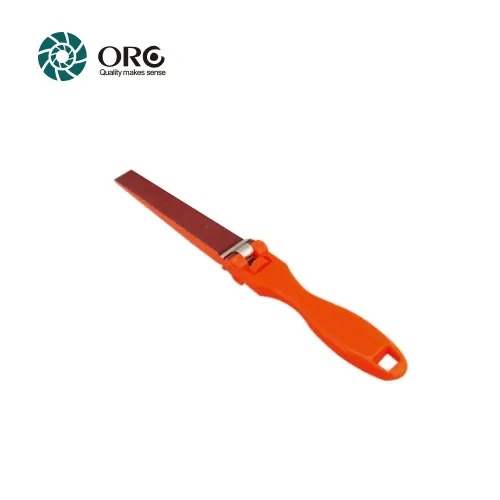
Adhere your waterproof sandpaper to a rigid wooden strip or plastic file blank. Utilizing a flat sanding stick allows you to true up flat surfaces, bezels, and straight geometric edges on ring shanks. This method provides direct leverage, cutting down bench time by several magnitudes while ensuring crisp, well-defined jewelry edges.
Production Tip: By utilizing mechanical rotation under low-to-medium RPMs (5,000–10,000 RPM), a rough ring casting that would normally take 10 minutes to sand completely by hand can be leveled, smoothed, and pre-polished in just 30 seconds.
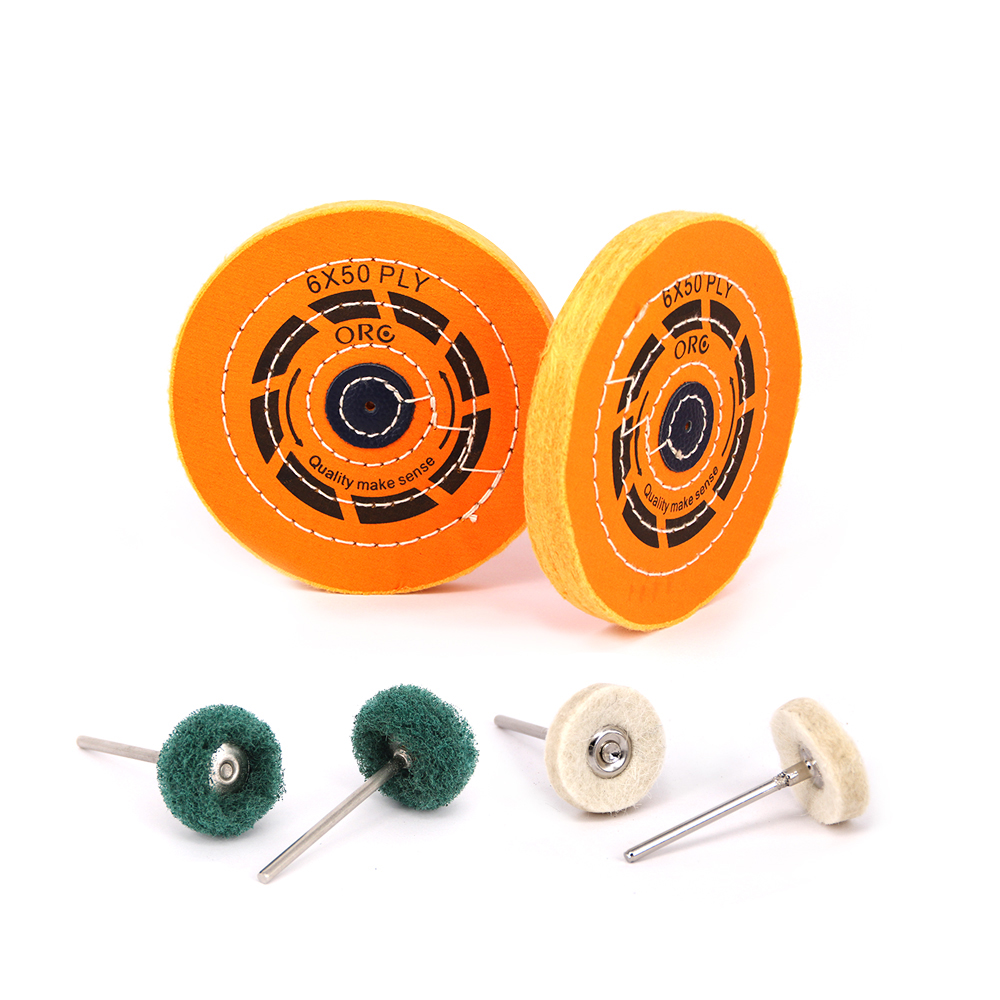
For jewelry factories and wholesale workshops looking to scale production, reliable abrasives are vital. Explore Orobrush's inventory of high-durability sandpaper and cloth wheels. We fully support bulk wholesale orders and B2B transactions to keep your factory running at peak efficiency.
I. The Short Answer: The Exact Sandpaper You Need
When your jewelry manufacturing schedule is tight, efficiency comes down to abrasive mineral composition and backing durability. Choosing the right abrasive media determines whether you clear the rough casting skin in seconds or waste hours wearing down your tools.
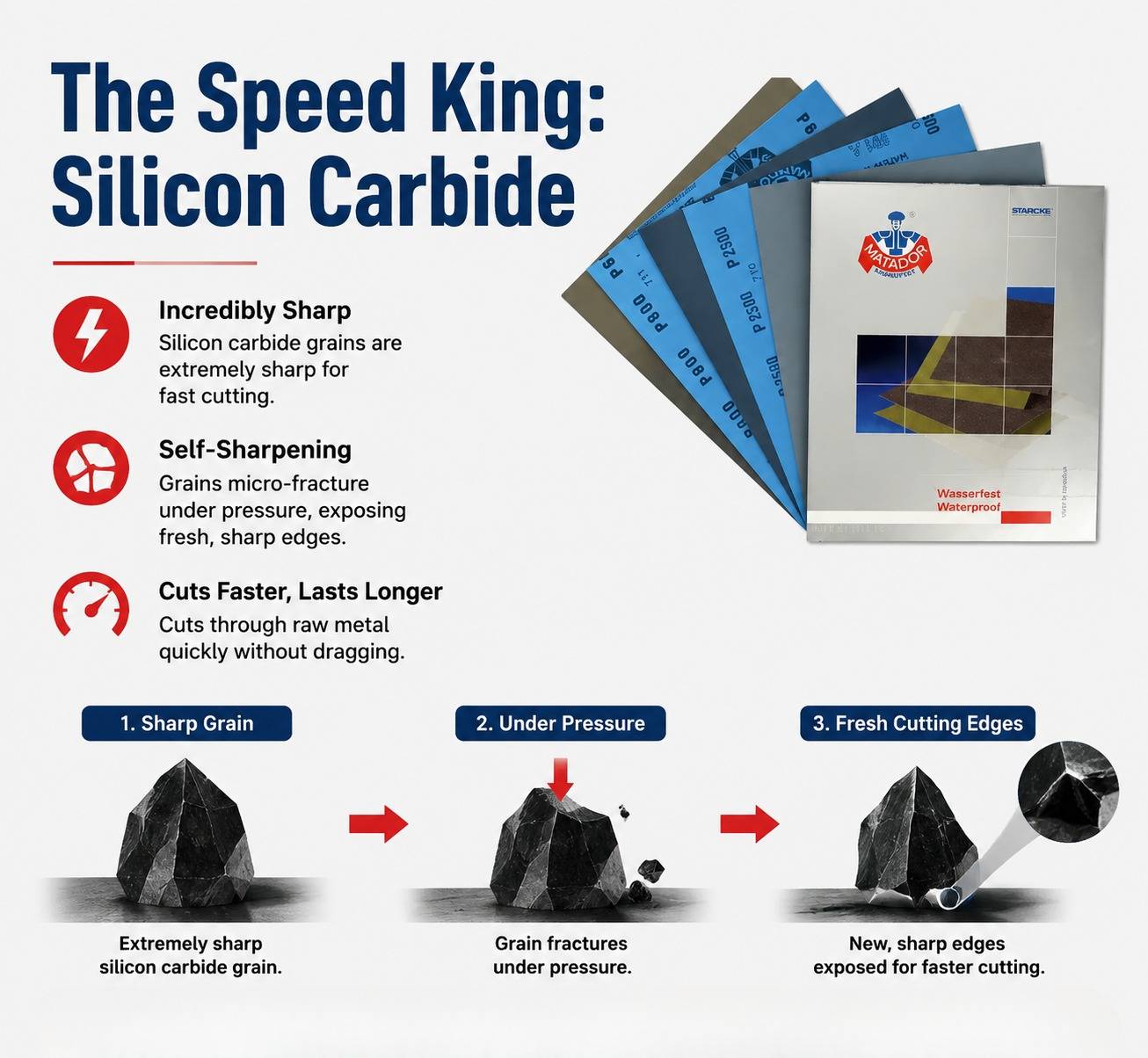
The Speed King: Silicon Carbide
Why it’s fast: Its crystal structure is incredibly sharp and undergoes "self-sharpening" (micro-fracturing) during use. As you work the metal, the grains fracture under pressure, constantly exposing fresh, sharp cutting edges rather than dulling flat. It is the fastest, most powerful material for cutting through raw gold, silver, brass, and copper castings without dragging the metal.
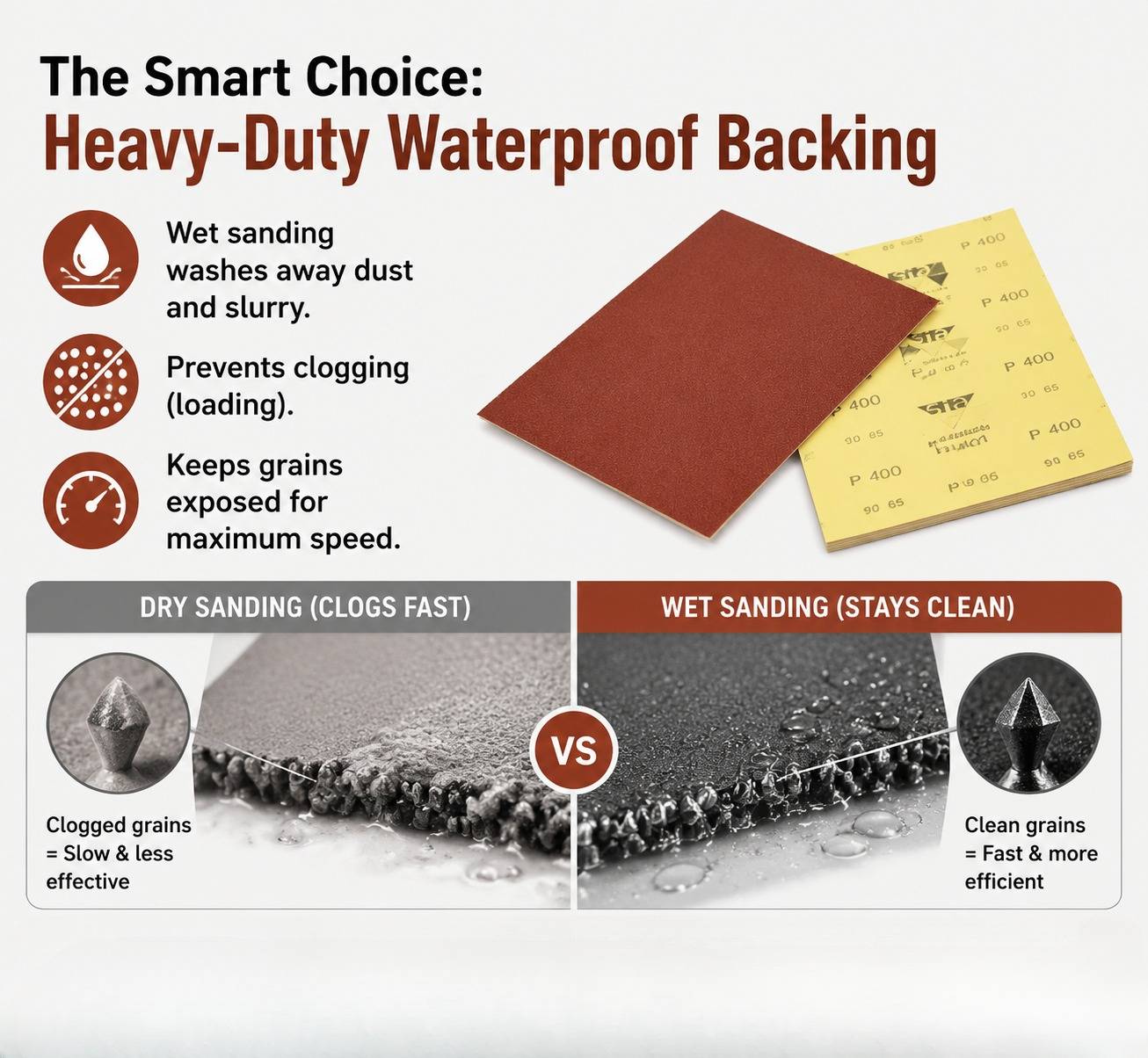
The Smart Choice: Heavy-Duty Waterproof Backing
Make sure to choose "Wet/Dry" sheets. Wet sanding instantly washes away precious metal dust and slurry, preventing the sandpaper from clogging (loading). When the paper doesn't clog, the abrasive grain remains exposed, keeping your sanding speed at peak efficiency while capturing precious metal particles for your refining bench.II. The "Fast-Track" Grit Combination
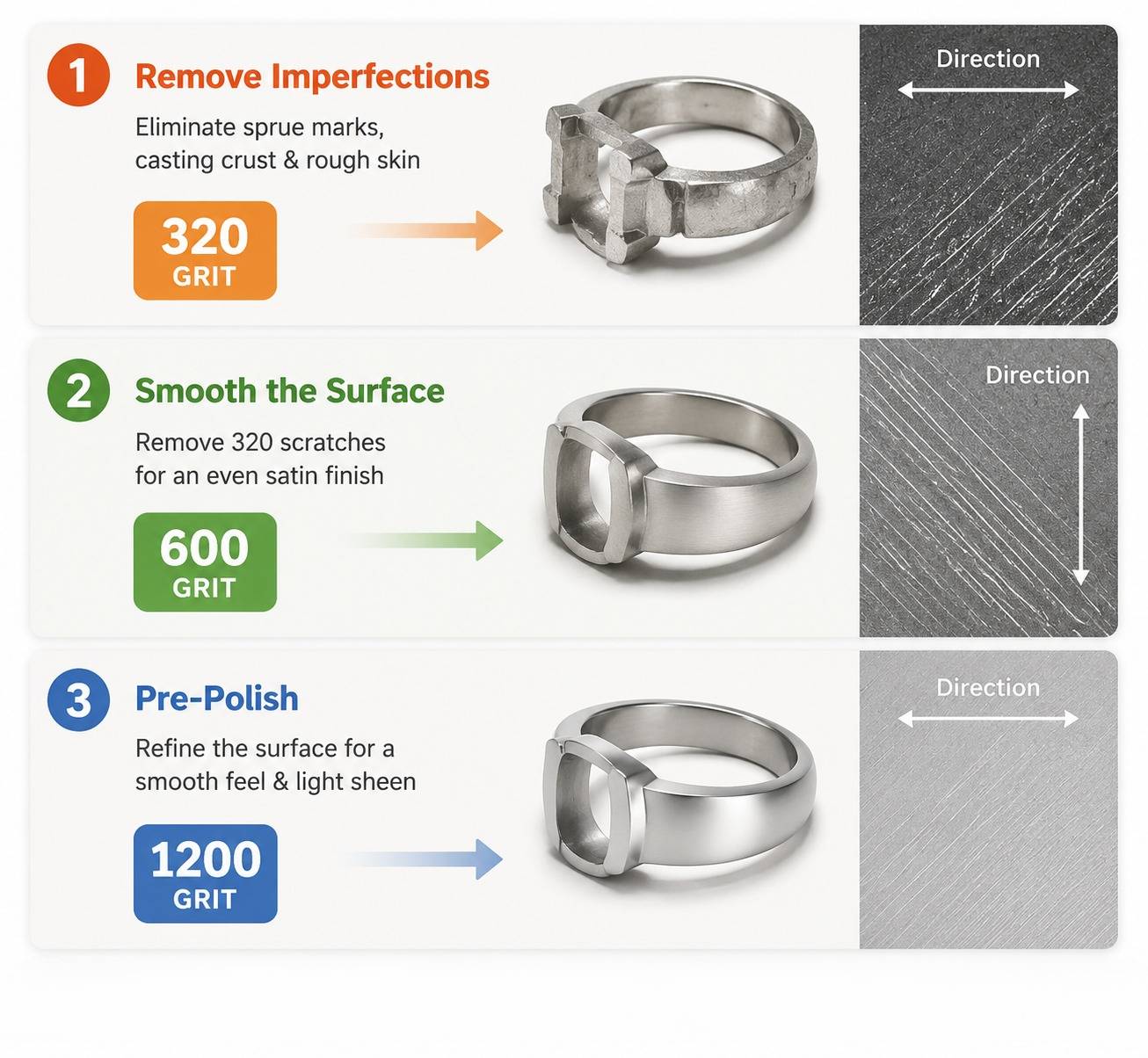
To optimize your production bench work, you need to eliminate unnecessary intermediate steps. Skipping grits completely slows you down, but using too many steps wastes valuable time. Stick to this streamlined three-step sequence to prep your precious metal surfaces for final buffing wheels.
- Step 1: Grit 320 (Removing Imperfections) — Skip the coarser 180-grit abrasive, which leaves deep cardeep scratches that are notoriously hard to remove later. Go straight to a high-quality 320-grit to quickly eliminate sprue remnants, investment casting crust, and the rough casting skin.
- Step 2: Grit 600 (Smoothing the Surface) — Jump directly to 600-grit. This step smooths out the uniform scratches left by the 320-grit paper. Work perpendicular to your previous direction until the metal surface develops a perfectly level, uniform satin finish.
- Step 3: Grit 1200 (Pre-Polishing) — Finish with a 1200-grit abrasive sheet or micro-micron finishing paper. At this stage, the metal surface is essentially "smooth" to the touch with a light sheen, allowing for a seamless, instantaneous transition to buffing with a cloth wheel and polishing compound.
III. Boost Efficiency: Use "Form Factors" Instead of Sheets
Holding a loose sheet of paper with your bare fingers is slow, uneven, and rounds off crisp edges. Commercial jewelry workshops accelerate their finishing workflows by converting standard abrasive sheets into specialized bench formats.Sanding Sticks
Adhere your waterproof sandpaper to a rigid wooden strip or plastic file blank. Utilizing a flat sanding stick allows you to true up flat surfaces, bezels, and straight geometric edges on ring shanks. This method provides direct leverage, cutting down bench time by several magnitudes while ensuring crisp, well-defined jewelry edges.
Split Mandrel Sanding Rolls
Wrap a precisely cut strip of silicon carbide paper around a steel split mandrel and insert it into your professional micromotor handpiece.Production Tip: By utilizing mechanical rotation under low-to-medium RPMs (5,000–10,000 RPM), a rough ring casting that would normally take 10 minutes to sand completely by hand can be leveled, smoothed, and pre-polished in just 30 seconds.
IV. Pro-Tips to Avoid "Slow-Down" Traps
Even with top-tier abrasives, poor workshop habits can bottleneck your finishing line. Avoid these two common pitfalls to keep your production moving fast.Don't Skip Grits
Attempting to jump directly from a coarse 320-grit to a fine 1200-grit is a classic mistake. The fine abrasive grains will merely polish the peaks of the deep scratches without flattening them. You will end up spending half an hour on the 1200-grit stage trying to erase those deep valleys, ultimately slowing down the overall process and wasting expensive fine paper.Keep it Lubricated
Always utilize wet sanding techniques when prepping raw precious metal castings. Adding a single drop of water, liquid dish soap, or specialized sanding lubricant reduces frictional heat, stops the metal from warping, and prevents the abrasive grain from loading up with debris. Proper lubrication can easily double your cutting speed while significantly extending the lifespan of your abrasive supplies.Summary
Achieving a flawless finish on rough jewelry castings efficiently boils down to a deliberate strategy: selecting sharp silicon carbide wet/dry sandpaper, following a strict 320-600-1200 grit progression, and leveraging mechanical tools like split mandrels on micromotor handpieces. By controlling your abrasives and cutting out manual friction, you eliminate the bottleneck between the casting flask and the final polishing wheel.For jewelry factories and wholesale workshops looking to scale production, reliable abrasives are vital. Explore Orobrush's inventory of high-durability sandpaper and cloth wheels. We fully support bulk wholesale orders and B2B transactions to keep your factory running at peak efficiency.